
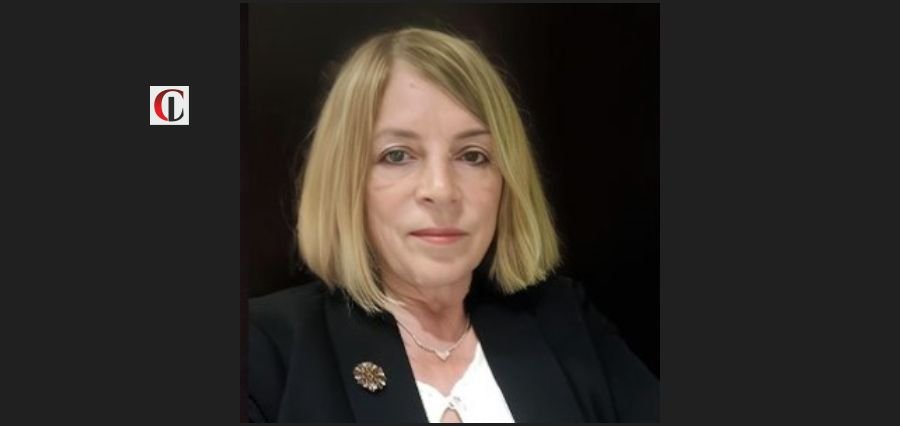
Imagine this: A doctor closes her office, disregards all conventional wisdom about healthcare delivery, and starts going to her patients’ front doors. Not during a crisis. For all of it. It seems almost reckless until you meet Dr. Sofica Bistriceanu, who has spent 25 years proving that the most radical thing a doctor can do is actually observe how people live. Her story is more than just a different approach to medicine. It’s about acknowledging a fundamental reality that modern healthcare has disregarded: healing happens where life happens.
When a Medical Degree Becomes a Question
Dr. Sofica earned her medical degree from Iasi University in Romania, then pursued advanced family medicine research at Maastricht University. Where most doctors see their education as the answer, she saw it as the beginning of a much bigger question: What if we’re looking at health in a completely wrong place?
Family medicine appealed to her because it’s the only specialty that lets you watch entire human stories unfold. Cardiologists focus on hearts. Neurologists focus on brains. But family physicians pay attention to births and deaths, triumphs and failures, how families shape individuals, how communities influence health, and how workplaces create stress that manifests as disease years later. “The problem? All of this remains invisible when patients walk into your office for fifteen-minute appointments,” states Dr. Sofica.
That realization gnawed at her. What is good about treating hypertension if you never see the family dynamics that keep blood pressure elevated? The medical school taught her to examine bodies. She wanted to examine lives.
The Most Radical House Call
In 1999, Dr. Sofica opened her own practice. Within a few years, she had over a thousand patients. This was nothing less than success by any conventional measure. However, she wasn’t satisfied.
For nine years, she watched patients walk through her door, tell abbreviated versions of their stories, and walk back out into lives she could barely glimpse. By the end of 2008, she made a decision colleagues probably thought was career suicide: she closed the office and took medicine on the road.
Dr. Sofica completely reimagined her practice around the medical home model- bringing comprehensive care into patients’ actual homes, where disease happens, where health gets made or broken, and where the truth lives.
As a result, everything changed. She could see medications gathering dust on bedroom dressers. She could observe tense silences during family meals that raised blood pressure more effectively than sodium. She could spot environmental triggers such as mold, poor ventilation, and unsafe heating, that no symptom checklist captures.
The onset and progression of disease, Dr. Sofica discovered, makes sense only when you observe how environmental factors, genetic vulnerabilities, family communication patterns, and life circumstances interact over time. “You can’t see this in a clinic. You have to go where people actually exist,” shares Dr. Sofica.
Working independently also meant she could select collaborators based on honesty, kindness, and competence. She could spend unhurried time with patients, ensuring both better outcomes and the inner peace necessary for sustainable excellence.
Science Meets Poetry on the World Stage
While revolutionizing her practice, Dr. Sofica was building an international reputation spanning four continents. She’s delivered over 135 presentations at scientific meetings worldwide and published more than 60 articles in leading journals.
In 2006, her doctoral thesis poster on plasma cation levels in dyslipidemia received a perfect 5 out of 5 rating among 230 entries at the NAPCRG Annual Meeting in Tucson. That same year, at the 5th NICHQ Annual Forum in Orlando, she won Most Creative Storyboard for a presentation built around her own poem, “The Snowball.”
She evolved into a physician-researcher who integrates poetry into scientific presentations and wins awards for it. Dr. Sofica understood something most medical professionals miss- effective healthcare communication requires artistic sensitivity and emotional intelligence that reaches beyond medical terminology into actual human experience.
“The Snowball” became her diagnostic tool. How someone responds to the poem reveals truths about their sensitivity, intuition, and cultural framework that no standardized questionnaire can capture. The following year, she received a Certificate of Excellence at the 6th NICHQ Annual Forum in San Francisco for “Face Light Reflects into Behavior.”
When a Practice Becomes an Academy
By 2013, Dr. Sofica had presented 52 research studies across three continents. The American Academy on Communication in Healthcare invited her to join their ranks. She renamed her practice the Academic Medical Unit – CMI Dr. Bistriceanu, S. It is a living laboratory where clinical care generates research questions and research findings immediately reshape how care gets delivered.
That year, the 25th IHI National Forum on Quality Improvement in Health Care honored her with the Service Quality Award for work on how offensive communication affects older adults. The Permanente Journal and IHI recognized what she’d been documenting: words don’t just hurt feelings; they alter physiology in measurable, sometimes devastating ways.
Today, she provides home medical services for patients with advanced heart disease, mobility limitations, and acutely ill children. She charges fees but extends generosity when financial constraints threaten care. She also works weekends at medical centers in Romania’s national health system. Patients can choose to pay for home services with unhurried attention, or access free services in the public system.
Pioneering Theories: When Communication Becomes Medicine
Here’s where Dr. Sofica’s work gets provocative. She’s spent years testing a theory that inappropriate communication causes specific physiological damage. Words carry energy. That energy, when harmful and repeated, disturbs human equilibrium in ways that lead to arterial hypertension, depression, type 2 diabetes, dyslipidemia, and even brain hemorrhages or tumors in vulnerable individuals.
In 2016, at the AACH Enrich Course and Research Forum in New Haven, she presented “The Effects of Inappropriate Words’ Energy Transfer to Vulnerable People and How to Balance Them.” She was proposing actual mechanisms by which toxic communication creates measurable physiological damage.
By 2021, her e-poster “The Effects of Improper Communication on Vulnerable People” was selected as one of the top 9 among 100 entries at the International Conference on Communication in Healthcare. She joined the Academy for Professionalism in Health Care that year.
In 2022, she presented “Improper Communication Leads to Brain Hemorrhage in Vulnerable People” at Allied Academies’ 25th Anniversary Webinar, receiving the Best Speaker Presentation Award at Palliative Care 2022 and the Best Poster Award at the 3rd International Conference on Palliative Care.
Dr. Sofica’s explored even more unconventional territory. In 2023, she received recognition at Cardio Hub 2023 for proposing that gravitational waves can be utilized therapeutically. Most recently, in 2025, she won the Best Poster Presentation Award at the 12th Global Virtual Conference on Cardiology for “Disrespectful Communication Alters Heart Function.”
The Doctor Who Writes Poems
Dr. Sofica has published seven poetry volumes through Cronica and Time with Iasi Publishing House. This isn’t separate from medicine; it’s integral to her approach to healing.
She believes that poetry cultivates the attention and sensitivity that distinguishes adequate physicians from exceptional ones. It develops the capacity to hear what patients aren’t saying, to recognize metaphors through which people describe suffering, and to communicate complex realities in language that touches hearts.
“Medicine is both a science and an art. The science determines what interventions might work. The art determines whether patients actually benefit. You need both,” opines Dr. Sofica.
What Drives Innovation
When asked what fuels her passion, Dr. Sofica offers a simple answer: “treating others provides profound satisfaction. But achieving this demands expertise in your domain, sophisticated skills for interacting with diverse people, and avoiding burnout that undermines effectiveness.
Avoiding external negative influences protects against forces that sap creative energy. Self-esteem provides the inner stability necessary to maintain boundaries, resist pressure toward compromised care, and sustain commitment to excellence.”
Dr. Sofica identifies her greatest strength as creativity combined with scientific rigor. These qualities aren’t contradictory but complementary. Creative thinking generates novel hypotheses. Scientific rigor tests them. Together, they drive genuine innovation.
She acknowledges a past weakness: “too much tolerance of others’ inappropriate behavior. That was in the past.” She’s learned that tolerance of harmful behavior doesn’t serve compassion; it enables dysfunction.
Shaping Broader Conversations
Dr. Sofica’s influence extends through prestigious roles. She’s a member of the Academy for Professionalism in Health Care. She serves on the Editorial Review Board for The Journal of Patient Experience, the Editorial Board of the Journal of Medical Research and Clinical Case Reports, and as an Associate Editor for Primera Scientific Publication.
Wisdom for Future Leaders
Dr. Sofica distills decades of experience into essential principles. She advises, “Be intensely aware when selecting collaborators. They fundamentally shape what becomes possible. Avoid toxic environments. Take a burnout seriously because it can destroy everything you’ve built.”
Her message emphasizes fundamentals: “Be honest. Be kind. Be generous when possible. Respect each person’s work. Eliminate arrogance. For genuine development, you need a supportive team, honest collaborators, adequate finances, and technological advancement.”
The Truth About Time
Dr. Sofica maintains an unusual philosophical perspective. She believes that life’s route is picturesque, but time slowly undermines everything we build. What remains essential? Departing with dignity, in peace.
“All come in greatness and pass on,” she reflects. It’s a reminder that medical careers are measured not by achievements accumulated, but by dignity maintained, compassion expressed, and healing facilitated during our limited time.
The Revolution That Looks Like a House Call
In an era when healthcare feels impersonal and rushed, when physicians struggle with burnout and patients feel reduced to diagnostic codes, Dr. Sofica offers something different. She demonstrates that the patient’s home can become the classroom, that communication itself functions as medicine, and that treating others with dignity remains the foundation of genuine healing.
Her story reminds us that medicine’s most profound innovations don’t always emerge from laboratories or require expensive technology. Sometimes they come from physicians who are courageous enough to see patients as human beings. Sometimes revolution looks exactly like a doctor showing up at someone’s door, sitting at their kitchen table, and really listening.
Dr. Sofica has proven that one physician, working with integrity and imagination, can pioneer new care models, contribute original theories to medical science, earn international recognition, maintain sustainable practice over decades, and provide genuinely excellent care to patients who might otherwise fall through conventional systems’ cracks.
The future of healthcare will be shaped by physicians who refuse to accept false choices between scientific rigor and human connection, between academic contribution and compassionate practice, and between personal sustainability and professional impact. Dr. Sofica has shown that integration is possible, and that medicine practiced with wisdom and courage can honor all these values simultaneously.
Her career stands as both achievement and invitation. It’s a demonstration of what one determined physician has accomplished, and a challenge to imagine what others might contribute if they dare to practice medicine on their own authentic terms.