
Human Value After AI
AI is revolutionizing the work processes in an unparalleled manner. The tasks that used to demand time, expertise, and hard work are progressively being taken over, sped up, or supported by intelligent systems. The various activities like writing, analyzing, forecasting, coding, responding to customers, scheduling, and even making decisions are all impacted by the machines that are constantly learning and improving. This transformation, on the other hand, is prompting a more profound inquiry for the leaders and the professional community.
If AI can outdo humans, what is left that is solely valuable about humans? The response is quite significant.
Actually, as AI becomes more powerful, human value will be even more apparent—not because humans are trying to vie with machines in terms of speed or volume, but because they are the ones providing the much-needed qualities of machines: meaning, judgment, ethics, trust, and leadership. The situation of human value with respect to AI is not doing less work. It is rather doing the most important work.
Judgment in Uncertain, High-Stakes Situations
AI can recommend, but humans still need to make the final decision. To the extent of their capabilities, the AI systems still need the humans’ intervention as, for instance, the best of AIs still limits itself to the data and even the historical patterns and objectives defined for it.
Often in business, the most important choices don’t follow any pattern; on the contrary, they are influenced by many factors such as uncertainty, conflicting values, lack of information, and impacts that are hard to quantify and thus, to measure. Human input comes into play at the time of deciding on the trade-offs to be made: being profitable or being fair, being fast or being safe, being big or being green, being innovative or risking failure.
These are not mathematical problems; they are ethical ones. In a world dominated by AI, the ability to judge properly is the most valuable skill because it decides who is going to take intelligence and for what purposes, and what outcomes are going to be considered acceptable.
Ethics and Accountability
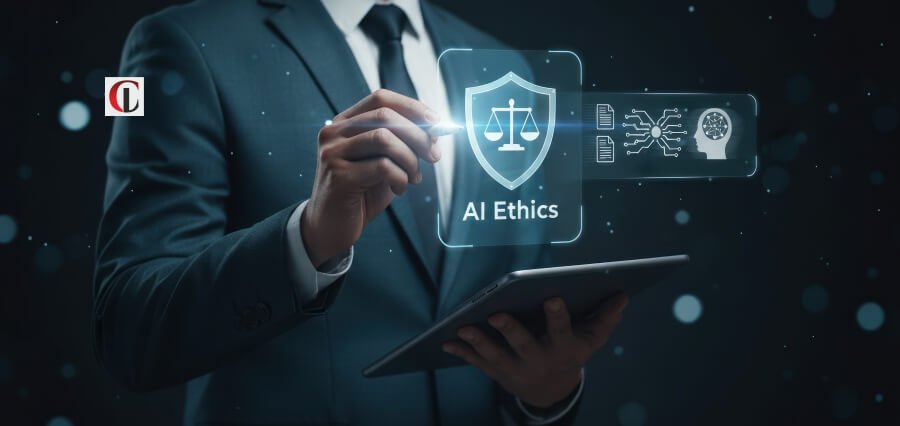
AI lacks a moral compass. It cannot comprehend concepts that are inherently human like dignity, harm, fairness, or accountability. It is capable of mirroring human values but only when they are intentionally incorporated into the governance structure. Thus, the situation makes the ethical aspect an advantage for humans.
Therefore, the leaders should outline the various ways that the organization will or will not engage with AI, including decision-making processes, monitoring methods, and harm-prevention measures.
Moreover, they should guarantee that, despite the fact that the systems are operating autonomously, accountability is still kept as a human affair. In the enterprises of the future where AI is present, the credibility factor will solely rely on the responsible usage. The trust factor will not just be solely based on the capabilities, but also on control, transparency, and integrity.
Trust, Relationships, and Influence
Relationships are at the core of business: with the customers, workers, associates, authorities, and next-door neighbors. AI may support communication, yet it lacks the power to substitute trust. Trust is built on human presence, persistence, and responsibility. In difficult times, customers seek comfort. An employee’s expectation is compassion.
Partners’ requirement is honesty. These are the basic human interactions that cannot be automated, even if the system is very convincing. The human factor after AI is the trustworthiness: the power to bring people together, resolve disputes, make people loyal, and guide them through the darkness. Trust is a human system, and it gains even more importance when technology becomes more effective.
Conclusion
The human worth post AI era is not a matter of battle with the machines, but rather of working with them, at the highest level, as partners.
However, the same core factors that have always been present in leadership and civilization have once again come to the fore: the ability to tell right from wrong in difficult situations, taking responsibility for one’s actions, seeking and being dedicated to a cause, building and keeping relationships, coming up with new ideas that are based on the original goal, and being able to help the team through the tough changes that are needed.
AI is going to change the whole work narrative. Nevertheless, it will be up to the humans to set the reasons, make the targets, and draw the limits of what should never happen.