
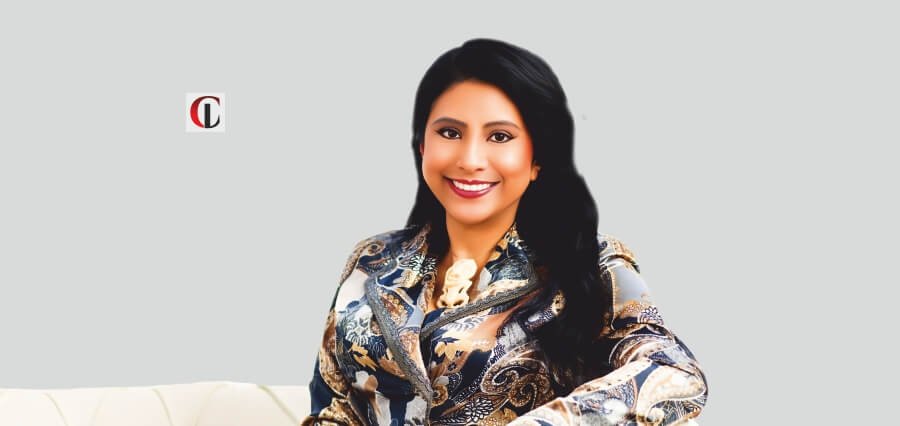
Catalyzing change is not a solitary act. Neither is driving transformation globally, even if you are an innovative leader like Mary Ann Thompson-Frenk D.D.(h.c.), FRSA., the recipient of the 2018 Civic Pioneer Award, one of the highest recognitions given by Congress to a USA female citizen, recognized by Her Highness Dr. Winfred Wanjiku Gitonga in 2024 with a “Certificate of Appreciation In Recognition of Exceptional Contribution to The Growth and Expansion of the African Continent” and selected by Her Highness Dr. Winfred Wanjiku Gitonga, to be one of the women profiled during the “International Women’s Day recognition” by The Royal Kutai Mulawarman Peace International Institute RKMPII Philippines, and sharing the 2025 “Logic For Peace Award” recognition from the United Nations with her husband, Joshua Raymond Frenk and the 2025 United Nations the President’s Lifetime Achievement Award from President Biden, her work, and that of the international teams she leads, have been recognized around the globe.
As co-founder of The Memnosyne Institute with Joshua Raymond Frenk, they are now celebrating 20 years of leading the international nonprofit, alongside its Executive Director, Phillip E. Collins, helping humanity tackle the challenges of globalization, spanning from its beginnings which included negotiating the first treaty/alliance between the Hopi and Navajo nations in 300 years; launching cultural center programs serving the Maya in the Yucatan and Tolteca of Teotihuacan, launching GreenSourceTX, originally envisioned by Dr. Phillip Shinoda and whose current leadership. Dr. Wendel Withrow & Julie Thibadeux, was recognized by the UN in 2026 linking the environmental advocates across a Texas, a state larger than France; extending into Asia where their chapter, led by Rev. Hiromi Yano has been initiating and overseeing reconciliation between South Korea and Japan; to New Zealand where they worked with Māori communities to reclaim traditional medicine practices under the collaborative leadership of Chief Rangitunoa Black and others now being reclaimed in hospitals to reduce the pain of childbirth; to Africa where their work has included sponsoring the late Imam Baba Matta’s efforts to combat extremism by sponsoring a caravan of Imams, Rabbis and Priests who traveled together, teaching literacy so that people could read for themselves that none of the Abrahamic texts advocated for killing those with HIV; to more recent work which included assisting the escape of Sudanese refugees from the warzone. The cross-section of interfaith/health work extends in the USA too, where Dr. Rene Hymel, a Johns Hopkins/Harvard graduate, has been working with houses of worship to educate Louisiana African American communities on diabetes prevention, resulting in dramatically reduced rates, and trained a team of like-minded doctors to do the same for African American and Native American communities across the country.
In addition to her work with The Memnosyne Institute, Mary Ann is a published writer, having contributed to multiple books, including the Amazon bestseller, “Expert World Leaders: Reaching Beyond Boundaries Volume One,” overseen by Leaders of All Nations’ President Dr. Caroline Makaka & Dr. Viola Edward De Glanville. , STEP JOURNAL: “Developing a Global Agenda- Expert Insight from the Inaugural STEP Global Congress” compiled by Richard Pease, and collaborated with her husband on contributing the chapter titled: “Social Acupuncture: How Facilitating Integral Philanthropy is the Future of Impactful Humanitarianism” for “Dawn of the Akashic Age: New Consciousness, Quantum Resonance, and The Future of The World” by Kingsley L. Dennis and three-time-nominated-Nobel-Peace-Prize Dr. Ervin Laszlo, which recognized Mary Ann and her and her husband, Joshua, as “two of the 21st Century’s Visionary Thinkers” leading innovative humanitarianism for their ‘social acupuncture’” strategy.
Yet, while Mary Ann began her humanitarian outreach via The Memnosyne Institute, she is also an award-winning sculptor, human rights/environmental activist, social-responsible investor/conscious-capitalist and international speaker, co-founding UTF Holdings with Kalu Ugwuomo Jr. supporting the UNs’ SDG’s & Eco-Eco llc./Green Energy Llc, with Tania Arrayales Rodriguez, (recognized by Mexico’s senate as the leading eco-architect in the Yucatan), creating solar farms which will double as pollinator sanctuaries, as well as the lead fashion designer for her new non-slave labor produced, “Black Sheep Achieve” shoe and accessories lable launching in 2025.
Having been adopted from Mexico when she was five days old, by the family that began and grew 7-Eleven into an international corporation, Mary Ann explains, “I was selected for adoption because I was born in 1977 at 7:11 am in Mexico and was made legally available for adoption on Mother’s Day of that year. As I did nothing to be born at the right time, place and year, I can never feel entitled to the opportunities that have been given to me in my life…the opportunities to breathe because my parents could afford to pay for me to be in the hospital for weeks or months at time due to asthma, the opportunities to ‘hear’ and ‘speak’ because my parents could afford to pay for specialists to put on rubber gloves to teach my tongue how to say words the tonal hearing loss in my cochlea I was born with couldn’t hear correctly. Now, I’ve spoken at the UN, House of Lords, and White House because someone gave me the opportunity to make the most of myself. Therefore, when I look at my life, I think of it simultaneously in two ways: one as the person who grew up with opportunities to have an education and access to support for dealing with a hearing loss, seizures, and asthma, and to be put in the world where I would meet my husband, Joshua. But then I also think of what it could have been like if I had not been born at the right moment in the right year and been available for adoption om Mother’s Day….if that hadn’t happened, I would not be able to speak correctly, have had access to the quality of education I received, etc and be sitting on the street, painting pottery praying that some snooty tourist going by in her stilettos would buy my work so I could eat. I’d be looking at her in her suit and saying, ‘If I were in her position, I’d be doing such and such with my life.’ So whatever impactful thing that might be, is what I feel I must hold myself accountable to do.”
As a Mexican-American immigrant with mostly Native American genetics, Mary Ann has felt compelled to not only advocate for indigenous people but also to serve as an advocate for immigrants’ rights and respect for their community alongside others. She received the 2020 Immigrant Advocate Award – Honoring Outstanding Immigrant Trailblazers issued by the City of Dallas, the State of Texas recognized her in the passing of the TX HR1472 Bill for her work serving the Native American communities during the COVID pandemic and she contributed the multiple chapters covering the USA individuals profiled for the book, “50 Inspiring Voices of Migrant Women: From Struggle to Success” by Mirela Sula and has participated in/and or led various activist engagements such as organizing the protest against Victor Orban’s push for racial purity and Holocaust denial and his support for CPAC’s advocating making interracial marriage illegal and reducing women’s rights in the USA in Dallas’ CPAC conference, sponsored buses to protest the children put in cages in McAllen, Texas by ICE and addressed over 7,000 marchers in The Women’s March in Texas in defense of racial equality, respectful interfaith relations, Native American and immigrant’s rights and gender equality.
Yet, she insists, “Within any organization I’ve been blessed to share a leadership role, The Memnosyne Institute, UTF Holdings, Llc, ECO-ECO/Green Energy, Thompson Fine Arts, Inc., or Black Sheep Achieve, while things often begin with my setting the tone, determining the direction and goals, there is not one single successful endeavor that became a success by my efforts and vision alone. As audacious as I can be, I am surrounded by those who have challenged me to aim higher, expand further, and offer potential strategies for doing so. No one ever makes it alone, and a leader cultivates this kind of innovation within organizations by balancing between ego and humility: You have to have a big enough ego to believe your core vision is worth other people’s time, energy, and money, and that you are the best choice to lead the charge. BUT you also have to have enough humility to learn from your team, to allow yourself to be offered a different way to get where you want to go, or to have your team suggest that there may be more steps than you thought to get there, or that you are aiming too low or should even consider aiming for something different. A leader’s humility enables the team to feel secure and supported in their intellect and resulting innovations, and a leader’s ego enables the team to feel confident that their efforts have a spearhead piercing between the present and taking the team into the future.”
Leading A League of Extraordinary Leaders
Mary Ann explains, “ One of the most prolific ways to define ‘impact’ for me is to generate leaders. When we enter a community, we aren’t just trying to put a solution from outside the community on top of a problem within the community. That never lasts. Instead, we invite the community, or are invited in by the community, to collaborate in creating solutions. This generates a sense of ‘ownership’. Everything is still based around our core values – whether that be in the non-profit work of The Memnosyne Institute around the world or via the for-profit People-Planet-Profit modalities of UTF Holdings. In The Memnosyne Institute, where our Executive Director, Phillip E. Collins, considered one of the top art curators in the USA, decided to apply his decades of curation experience towards curating humanitarians instead, I’ve witnessed The Memnosyne Asia Chapter, led by Rev. Hiromi Yano, coordinate reconciliation efforts between Japan and South Korea, whose efforts are being given recognition by the South Korean communities this year. We’ve witnessed Angel Áak Báalamkéej Sulub, who heads up “Centro Comunitario U kúuchil k Ch’i’ibalo’on”, one of two Memnosyne Cultural Center programs in Mexico, with this one supporting the Maya community, be recognized by UNESCO. Here in the United States, we’ve witnessed Thomas Q Johns, Memnosyne Institute’s computer engineer working on the Vital Signs Monitor, an AI we are developing to assist the UN in meeting the Sustainable Development Goals, be recognized alongside Joshua and me at the United Nations last year. The point is, all of these people, and more, would be pursuing making an impact with or without us. But when we can harness their passion, support their creativity, respect their insights, and forge strategic collaboration, assisting them in magnifying their impact, the potential of one individual, if supported, can serve as a magnifying force that inspires movement forward and onward. Not every fight is mine to do personally – often my task as a leader is to identify and uplift others. When I hear our shared values coming from their voice and others resonating, then I know there is proof of much more success than if I did this journey purely out of ego, which would be far more limited and lose the contributions of true visionaries. In fact, I know that someone has successfully risen towards leadership when they are taking the initiative to expand on the original goals set.”
Today, some of the expanding work that Mary Ann Thompson-Frenk is excited about pursuing beside her teams globally includes UTF Holdings, Llc where her partner, Kalu Ugwuomo Jr, brought her the concept for a multi billion dollar deal which she states, “I’d never have conceived of on my own, but am thoroughly enjoying the challenge as it takes the same energy and time to pursue something big as it does something small!”. In ECO-ECO/Green Energy, Mary Ann, with her partner, Tania Arrayales Rodriguez, took the vision for a solar/wind farm and is combining it to serve as a pollinator sanctuary while exploring how to expand it into an eco-responsible data center. She explains, “Tania and I understand that it will take innovation to prevent environmentalists’ understandable concerns. But unless someone says, ‘Can this be accomplished in a better way?’ it won’t get done.” In her company, Thompson Fine Arts, Inc., led with her husband, Joshua, they are excited about the upcoming “Prolific Profile Series” highlighting Rev. Peter Johnson, (the man MLK assigned to oversee the fight against segregation in Texas), Lawrence Bloom (the man who got then-Prince-now King, Charles to join him in challenging all major hotel chains to embrace responsibility for their environmental impact), and Ricardo Cervantes Cervantes, (the spiritual leader of the Tolteca of Teotihuacan whose helped his people balance traditional sacred wisdom with embracing the fast paced technological growth of the 21st century). She explains, “The idea for the ‘Prolific Profile Series’ came about because our late friend, Bill Gladstone of Waterside Literary Productions suggested our companies collaborate and when his wife, Gail, took the helm, she fully embraced that shared goal and is donating, alongside us, a portion of profits to be donated to The Memnosyne Institute to help support the initiatives carrying on the passion of those lives highlighted.”
Similarly, Mary Ann credits her team in The Memnosyne Institute, for their ongoing initiatives, such as that led by Shinto priest, Rev. Hiromi Yano who has been leading reconciliation between Japan and South Korea; the USA Rev. Todd Collier who turned the organization’s Interfaith Service Network program into FoodSourceUSA which has saved over $60M worth of food from being thrown into landfills and redirected it to homeless shelters and food pantries from Alaska to Florida from NY to California to Puerto Rico to Hawaii and in the UK, where 7.5 million people in the UK are experiencing food insecurity, with 11% of that population in Wales. David Solomons, Sky Andrew, Kidd Waya, Dana Amma Day, Ne Lwin, and Sunil Purohit have been coordinating with Lord Andrew Stone, Baroness Sandip Verma, and more to extend that work into a FoodSourceUK initiative beginning with Merthyr Tydfil, Wales, to establish a food hub to assist existing efforts and link in more participants. Meanwhile, the organization’s cultural centers in Mexico, Centro Cultural Tolteca de Teotihuacan AC, serving the Tolteca, and Centro Comunitario U kúuchil k Ch’i’ibalo’on, serving the Maya, have led the reconciliation between the two tribes after 500 years while collaborating in cultural preservation.
But what excites Mary Ann and her husband, Joshua, especially these days, is establishing hybrid strategies between for-profits and non-profits. She explains, “No one has ever won a chess game by playing the board as they wished the pieces were laid out, instead of dealing with the reality in front of them. We have to strategize with reality in mind, no matter how we might think about that reality. The facts are that the majority of the world’s money is in the private hands of corporations and individuals as opposed to countries and nonprofits. So if we want to address the inequity of the world, we have first to recognize that we are part of the ecological, economical and sociological systems and not separate or above it. Buckminster Fuller used to say that to make people change, you have to make the alternative so simple and easy that they choose it almost out of laziness. So that’s what those seeking to shape the 21st century must think. Just like how the body gets a stroke when the blood doesn’t flow through the whole body, our economic systems become stymied when huge industries don’t plan out strategically to ensure the economic flow is benefiting multiple economic levels within a community.”
Among these non-profit/for-profit “hybrid projects she is helping to coordinate are with her, Joshua’s and Kalu’s good friend, the award winning singer and child soldier survivor, Emmanuel Jal and his organization, Gua Africa, The Memnosyne Institute, UTF Holdings, Llc, and Baroness Sandip Verma’s NEXUS GREEN, to create the “The African Breadbasket Program” to provide economic means and food for the Sudanese refugee families they helped get out of the warzone and who are now in Ethiopia.
The project will begin there, but is planned to expand across the continent as quickly as possible, with a percentage of grain and food produce going to sustain communities and a percentage aimed at being sold into the global economy, thereby creating sustainability. With a huge percentage of food rotting due to lack of refrigerated storage, Baroness Verma’s NEXUS GREEN providing it will enable farmers to benefit from their full sweat equity and purchase their plots of land in about 5 years while generating a profit from investors into UTF Holdings, from which a percentage will be donated back into The Memnosyne Institute to both help get more refugees out of the war zone and empower others to benefit from the same program, a strategy designed by their UK Chapter Advisory Board Member, Lord Andrew Stone. Mary Ann explains, “After the war between Russia and Ukraine cut off the continent of Africa from its main grain source, Ethiopia and Egypt are poised to fight each other unless we can dramatically increase grain production. With most of the first world aligned with one or the other, this is a recipe reminiscent of WWI unless a for-profit and non-profit effort is put in place to address it. So this promises to be extremely life-changing for the African communities and profitable for investors with the means to establish and sustain the non-profit on the ground, Gatwich Club’s training for aspiring farmers to participate. I consider it among the things that have the potential to have the greatest impact on our world right along with the Vital Signs Monitor.”
The Memnosyne Institute, led by computer engineer and sociologist, Thomas Q. Johns, has developed the AI called the “Vital Signs Monitor” based on their late Advisory Board Member’s, Dr. Don Edward Beck’s, Spiral Dynamics methodologies which he used to advise Nelson Mandela in overthrowing apartheid, (as well as predict terrorism and bioterrorism for Singapore and Egypt and demonstrated accurate predictions for the shooting that tragically occurred in Norway). Ross Perot had encouraged Dr. Beck to see if the methodology could be adapted to the computer age, and they discovered it could be, but were limited by the technology of the time. Now, Dr. Don Beck’s protégé, Thomas Q Johns, has developed the “Vital Signs Monitor” (VSM) based on Don’s Spiral Dynamics model, that measures the SDG’s like a body’s vital signs, for a community – be it a tiny village or a metropolis like Manhattan, helping UN participating nations diagnose themselves from economies to environment to educational access to cleanliness of water, etc and taking into account what will be needed to reach their goals given their existing budgets. Meanwhile, the organization has entered into a collaboration with Logictry, led by Chelsea Toler and Chris Fronda, which provides another AI designed to help people think through concepts logically by offering questions that lead toward informed objectivity. Their AI will offer a place online where those with potential solutions in the private sector can fill out a form and make it available to those nations searching for solutions. Together. The two AIs will collaborate to enable the UN’s participating nations to self-diagnose and then identify the potential solutions that match their needs. Mary Ann explains, “The beneficial opportunities for humanity from such a collaboration, encouraged by Ambassador Stan Smith and The Memnosyne Institute’s board member, Adolfo Ayuso Audrey, are light years ahead of where we began because we have been open to collaborations. Since our organization’s internal processes are already based on back-and-forth energy between minds, it is a natural thing to extend that flow to collaborators outside the organization. When we do, the potential for positive impact set at a global scale is immeasurable….and that excites me because I’m more interested in establishing tools that will continue to empower generations long after I am gone, than just seeking bragging rights for my limited time on this planet.”
Navigating Resistance Encountered at a Global Level
When asked about navigating resistance she’s encountered at a global level, Mary Ann explains, “People’s biases – be they ethics, (or lack of), they grew up gaining from their grandparents or the memetics of a competing world exalting sociopathic behavior, or a combination of all the above and more – are not isolated psyches.
As a petite 4’11 brown-skinned bi-woman, there are times when I should send in an employee who is a tall, white, straight man. I may not like that fact, but I understand that people look before they decide to listen. If my dedication is to the goal of benefiting many, then that is worth so much more than my ego being annoyed that a presentation or pitch isn’t coming from my voice and face. The journey we are all on towards learning to recognize our common humanity cannot be made overnight. It is a sacred, inherent memory that we each have the potential for remembering about ourselves as a species. We either will wake up to our shared, increasingly interdependent value to each other and the planet, or we won’t survive. But the incredible potential of humanity to become so much more, to evolve into a place where our sociological software matches our intellectual hardware, is worth swallowing our egos for.
Conversely, there are times when I must take an honest look at the fact that I am more privileged than many with my skin color in the United States at this time and that I can speak out without fear of being fired when I see injustice aimed at my demographic or anyone else’s. In these moments, I feel a responsibility to speak out, to humanize the face of a race to those who might otherwise unthinkingly go along with policies based on prejudice. As I explain to people, if my life has contributed anything positive in the world, then it is proof that what a brown-skinned female born with a hearing loss can contribute something beneficial…and if that is so, then please consider the positive potential of those who look like me, who share my melanin, or who were born with a hearing loss. Today, the USA has decided to end programs designed to empower those born with a hearing loss or blindness to complete their education. They are dropping this in the name of it being DEI. But if you don’t want those of us born with disabilities relying on the state for the rest of our lives, then empowering us to be contributing members of society makes more sense. I can say that here without fear of being fired because I am the president and co-founder of my organizations, for-profit and non-profit. But many would be terrified of being fired. So in such a situation, it is not about me, it is about my responsibility to those without a voice to speak out.”
Practicing Social Akido
When asked how one goes about the process of dealing directly with such challenges, she further explains, “It is also important to note that the socio/politico/environmental influences will play a role in determining how unpredictable outside factors can be….you wouldn’t try to build a house of cards inside a fun house. Likewise, when there are moments of uncertainty, I like to practice what I call ‘Social Akido.’ Akido is the only purely defensive martial art there is. The joke is that if two Aikido masters faced off, they would stand, staring at each other, because Aikido succeeds by redirecting the energy the opponent exerts towards your own goals. In moments of uncertainty and high-stakes change, identify the source of the area of greatest energy – that may be an individual, or it might be a social movement or other external factor.
You can’t win over people by what you want; you can only win over people by what they already want. Identify that and map out how you can link their priorities and values with the action you need to take. It is critical that you aren’t limiting their potential to partner by insisting they are taking the action for what you perceive as the ‘right reason.’ I’ve accomplished a lot through the years by identifying someone else’s priorities and ensuring they receive what they most want by participating as I needed them to. I don’t care if they are doing it for the same reasons. I care that they are doing their part of the actions needed so that I can get the team to meet the goal set.
For example, I once was approached by a young man after speaking at the United Nations. He explained to me that his family owned the largest oil company in Russia. He told me he cared deeply for the environment and was frustrated that, despite the fact that his grandfather wanted to hand the reins to him, skipping his father, he could not make headway in convincing his grandfather to care about the environment. He also explained to me that he wasn’t naïve in that he understood that in order to build such a position, he knew his family must have acted like a mafia generations ago. I asked how old his grandfather was.
He said in his late 80’s. I told him that at that age, he most likely would not be able to change his grandfather’s values. Still, if he took a look at what motivated him, he’d most likely see that his grandfather was concerned with maintaining and growing the family’s financial power. Therefore, I suggested he should tell his grandfather that obviously as a man in the oil business, he of all people, were aware that oil is finite and that if he was wanting his grandson to ensure the family had the same level of wealth in the future, they should invest in alternative forms of energy as well so that when the time came, even if it were in his own grandchildren’s lives, the family would maintain its power and wealth. The next year at the UN, that same young man told me it had worked, and he had been able to redirect significant capital into wind and solar that his grandfather had refused to do before. I share this as an example of the skillset any of us wanting to redirect, essentially in an act of Social Aikido, society’s or an individual’s, willingness to make change.”
Being a true change Catalyst Instead of a passive observer of Transformation
With the world changing in vastly unpredictable ways, it’s easy to be overwhelmed. Still, Mary Ann encourages others not let themselves give in to the natural tendency to wait out the chaotic changes affecting world economies, societies, and the planet.
Instead, she points out, “Chaos offers opportunity. Yes, it is uncomfortable because we are living in a time where significant powers are trying to reshape the world order, and many do not possess an ethical core. But chaos, like an earthquake, pry’s open doors and windows that wouldn’t budge before, makes cracks in walls we could never have gotten through before, and like a granite boulder now broken into parts, offers up materials we couldn’t access before.
Similarly, while it is terrifying to see core values of our democracy having to be defended both inside the USA and around the world, I can promise you that those who are self-serving are looking at the chaos and asking ‘What’s in it for me? What can I get out of this?’ So if you are a person of compassion, a person of integrity, a person who cares about the wellbeing of a demographic completely different than yourself, or/and a person who understands either we make it together as a human species with a healthy planet, or none of us have a future – if you are a person who understands any of those things…. then I suggest it is your responsibility also to ask ‘What can I create out of this chaos? How can I harness newly available opportunities and resources to uplift not just myself, but others and our planet as well?’ Because the truth is, peace will only be possible when it is as profitable as war, and a better environment will only be possible when achieving it is as profitable as polluting it. It’s important to push for these win-wins-wins (meaning you as individuals, we as a species, and we as a planet), because while some people will join you on your journey for shared values, many will be in it only for themselves, and to be most strategic, you need them too. So don’t omit people because they don’t perfectly match your values; invite those whose resources (money, influence, energy, time, etc.) you need to join you, but instead of trusting their loyalty to the cause, trust their loyalty to themselves. If you can create a win-win-win, you can often move mountains.
You can never succeed by trying to force your values on others. Sometimes, people will have an epiphany in the midst of execution, but many times they won’t. Sometimes, it will be years later that a collaborator has come back to me and let me know how, upon reflection, our collaboration had planted a seed of change in them, and now they want to re-engage, but with shared values and intentions. If I had limited myself to only collaborating with people who already shared those things, I would have robbed myself of a future collaborator who sometimes has wound up making a significant difference towards the success of another project.”
Identifying and Uplifting Leaders
I’m always looking for the natural leaders – those whom I know if uplifted can do so much more. These people aren’t always younger than me, although sometimes they are, and other times they’ve been quite a bit older than me. I like to surround myself with diverse voices providing diverse perspectives. I find value in all of them. What they have in common is an innate sense of recognizing existing systems, how to harness them, and a high EQ in terms of working with people. If you have both of those things and a strong sense of compassion and passion for acting on them to uplift humanity and our planet, then often the only things missing are opportunities. If I discover someone whose voice has the potential to make a powerful impact, I ask them about their vision for humanity, their personal aspirations and if they seem to have a core inner compass of appreciation for life’s potential and a drive to create solutions, I offer to either give them a chance to create a solution from inside The Memnosyne Institute or with UTF Holdings Llc’s backing, such as Theo Wilson’s “Rebirth Earth” a project we are proud to serve as Executive Producers for, or perhaps support their own independent endeavor, like I’ve done with Marcuss Russell’s Commissary Is Very Necessary or perhaps they possess a living legacy that the world desperately needs to hear, in which case we profile them via the “Prolific Profile Series” via publishing with Thompson Fine Arts, Inc, and Waterside Productions, thereby providing a platform for prolific life whose story stands to have a profound impact, like with Rev. Peter Johnson. Not everyone is missing the same puzzle piece, and my job is to recognize the pieces missing and help them gain those things so they can go further and be lifted higher. Former Ping Pong Olympian, Sky Andrew, is a good example of that, wherein, Planet Ping” is a hybrid for-profit/non-profit model manufacturing sports equipment with a portion of profits providing ping pong tables and sports equipment in refugee camps and underserved communities where children have no access to playgrounds or room for large field sports. In both his case and Theo’s case, I discovered I could link another mentee, Ne Lwin, with them, who had the knowledge and experience they needed, while gaining mentor experience for myself. So sometimes, as a mentor, my task is not always to teach directly, but to guide people into opportunities to uplift each other mutually. Some of those I am honored to have been called a mentor by are Chelsea Toler of Logictry and Ne Lwin of Lwin Legacy Advisory, who works with UTF Holdings. But the truth is, I am mentored by them as well, as there is always plenty for me to learn from, and those I’ve called my mentors over the years have more recently called me their mentor. I never see it as a one-way relationship with my holding all the insight, or else I would wind up allowing my ego to limit my access to valuable perspectives and wisdom.”
How Corporate Leaders Can Tackle Today’s Challenges
“It can seem overwhelming. Trust me, I understand. Today, I don’t dare leave my home without carrying a passport and have been stopped by ICE more than once. But it is imperative to remember three things:
- Don’t lose heart. Not all transformation is made in our own lifetimes. I once shared a story of how the Ku Klux Klan had terrorized my grandparents, uncles and Dad,(due to 7-Eleven promoting people based on the quality of their work instead of their race, religion or gender starting in the 1920’s), with an employee who just stared in disbelief at me because he had just inherited a trunk left to the oldest son in a family of brothers. Excited, they had all opened the trunk only to be horrified at what was inside: It was the robes of the leader of the Dallas Ku Klux Klan. My employee did the math and said, “It was my grandfather who led the Klan in terrorizing your family!” Then he paused and added, “Well, y’all won! I am in charge of your interfaith, intercultural, interracial outreach service program, and I love my job!” and he was right. My grandparents didn’t live to see that. Still, I lived to collaborate with a man who I came to view as a beautiful soul whose work laid the foundations of what would eventually become the interfaith intercultural, interracial outreach program that’s saved over $60M worth of food from landfills today, FoodSourceUSA, that in turn even redirected food into the Ukraine under Rev. Todd Collier. Sometimes victory isn’t in the immediate battles, but is to be found in the hearts of people across time.
- When you create a business plan, treat humanity and the planet as shareholders in your head by advocating for them throughout designing your strategy – and not as an afterthought. Think of, as my Apache Spiritual Leader friend and Memnosyne Board Member, Gregory Gomez says, ‘the two-legged, four-legged, finned, winged and rooted’. It’s easier to fall into Victor Lebow-type business ethics out of habit if you don’t train your brain to look out for the interest of the larger ecosystem we all rely on. Think of the future by setting corporate policies for paying a living wage, defined as a set percentage relative to inflation, so there isn’t an opportunity for future leaders to use today’s numbers to cause harm in a future where today’s numbers might not reflect those economic realities. These are the very basic things you should never budge on. Just going through your business life with this understanding alone will lead you to be a transformational leader known for win-wins.
- The future will be productive only if we recognize we are each part of an interactive, increasingly interconnected sociological, economical and ecological ecosystem. The concepts of growth within isolation and sustainability without collaboration don’t exist. It actually never has, but we have too often hoodwinked ourselves as a society into thinking a lone leader is doing it all by themselves. Something my father, John Philp Thompson, Sr., once pointed out to me was how on Fitzhugh, a street crossing Turtle Creek in Dallas, Texas, there was a low muddy crossing that he would use horses and a cart to deliver huge blocks of ice across, back when 7-Eleven’s parent company, Southland Corporation, was just Southland Ice. My father, John P. Thompson, Sr, preferred to use the horses instead of a car because the wheels would always get stuck in the mud bridge, and horses could pull the cart out of the mud, but the car would be stuck. Then one day, the city lifted and paved the road. He was able to make deliveries with the car and as a result, increased them four times over, raking in more profit that would eventually enable the company to grow, paying for things like milk, eggs, cheese, etc that could be sold in the U Totem stores that preceded 7-Eleven’s. In this way, my father explained that 7-Eleven could never have come to be during the depression if it hadn’t been for the taxpayers who paid to lift and pave that road. This means that as massive as 7-Eleven would become, it could not have grown to become that without the support of the community and therefore corporations are part of a larger sociological and economical and ecological system. If overseen with respect for this fact, organizations, such as for-profit corporations, can be a healthy contributor to the larger shared collaborative ecosystem of humanity. My father was most proud of fighting to make profit sharing legal and advocating for an Equal Opportunity Employer. These concepts are natural when a corporation recognizes it is part of a larger ecosystem. But if we ignore the degree of our organization’s influence, such as not providing a living wage or polluting a source of drinking water, or just hiring based on the lowest cost instead of checking to see if slave labor is the reason it is so much lower, we become complicit by choosing to act in ignorance.
- What is hard for people to face is that there is no excuse for ignorance today, as with just the touch of a button, we all have access to more data than kings, queens, presidents, etc., ever had before us. So the choice isn’t whether you will impact this world. You already are just by how you interact with it – how you buy and invest. The world is more interconnected than ever, so the question isn’t if you are affecting the current and future culture of humanity. Instead, the question is whether you are going to embrace your influence consciously. While the current focus on globalization is on how its growing reality will affect the world economically, few are discussing how else it will continue to affect the global culture of humanity: It will continue to affect the arts, the sciences, the spirituality, and the very ecology of our planet. Today, we are at a point between countries, religions, and cultures where we will either bump into each other, walk over each other, or instead choose to collaborate with each other consciously and evolve humanity. If we allow ourselves to grow randomly, we will invite more misunderstanding, more war, and less innovation. But if we can choose to collaborate responsibly, and thereby become the conscious cultural creators of humanity’s future, that future is limitless!”