
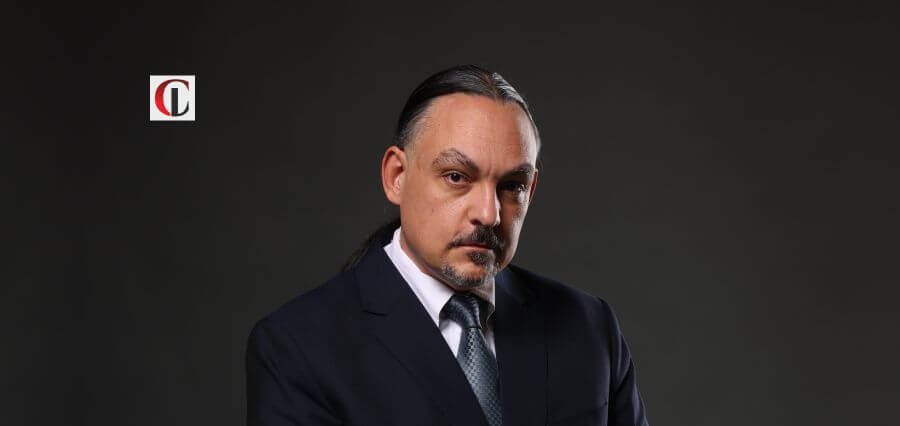
From the Olympic flame to the stadiums which were turned into living stories, John Jossifakis has been able to operate in the line of imagination, precision, and human feeling right through his whole life. Even before the time of the awards, titles and global acknowledgment, his journey was a combination of an intuitive grasp of the moments that are felt, remembered, and shared by millions at once. It is this very instinct which has helped him traverse the world’s most intricate stages, from world-class sports events to mega-cultural ceremonies that defined.
He is not just the Managing Director of John Jossifakis Productions FZE but also a visionary in live events and large-scale productions. His work is not only about logistics and organization; it is more about storytelling, emotional intelligence, and an understanding of the audience’s psychology that is fine-tuned to the max. he handles every project with a blend of creative courage and human delicacy; be it managing through the live broadcast pressures, or employing high-tech facilitation, or leading huge international teams.
Over the years he has worked with international institutions and cultural platforms and has been a constant factor in the live experiences inspiring the boundaries to be pushed even further, challenging the status quo and pioneering innovation. His leadership is based on a simple and straightforward conviction: the producing of the phenomenal shows is done by the granting of authority to the people and the building of connections. It is this mindset that keeps on defining his journey and molding the global ceremonies’ future.
Creating Alternative Realities
Jossifakis approaches mega-ceremonies as collaborative masterworks where marketing, public relations, communications, and brand identity departments converge to forge a singular vision and narrative. His role extends beyond mere coordination, he spearheads teams of ceremonies and infotainment experts who possess the rare capacity to tell stories, create memories, and evoke emotions on a scale that defines nations.
“Everything has to do with the ability to understand the vision and translate it in a way that can be memorable, emotional, and relative to the audience and spectators. Unless you connect with your audience, you won’t be able to make a memorable statement and leave a lasting impression,” he explains.
He recalls the legendary lighting of the cauldron at the Barcelona Olympics in 1992, where an archer shot a flaming arrow to ignite the Olympic flame. While everyone remembers the moment, few know the archer actually missed on show night, sending the arrow into the stadium parking lot. The director cleverly used camera angles that made a miss virtually impossible to detect, preserving the emotional impact of the moment.
“This is what we do in events. We create alternative realities to transport people to a new realm where they can forget their worries and dedicate their undivided attention for those 90 to 120 minutes, into a new moment,” he says.
The Human Factor in High-Pressure Production
Managing thousands of volunteers, contractors, artists, and specialized international production staff represents the toughest aspect of Jossifakis’s work. He rejects the spreadsheet mentality that reduces people to line items, instead focusing on human dynamics as the core attribute of success.
“Everyone has a story, an issue, or a background that requires either time off or special treatment. Starting from the crew backstage to the talent onstage, the human dynamics remain the same. Everyone needs an allocation of time, attention, and personal care,” he notes.
His methodology centers on creating support systems that allow people to grow while managing their individuality within a pool of talent. The live events industry attracts powerful personalities who demand attention and careful handling. During mega-ceremonies or rock tours, teams spend countless hours and days together, making equilibrium and inclusion essential.
“It’s important to ensure a balance of responsibility and make people feel included in the decision-making power. This enlists in people a sense of belonging, ownership, and contribution. If you want your team to fight for you, make them feel they are part of that fight,” he emphasizes.
Embracing the Digital Revolution
The convergence of technology in live events fascinates Jossifakis, who witnesses the industry slowly catching up to the digital twin revolution. Event management AI programs now plan better events and create intricate methodologies, while humanoid robots are serving as backup dancers for live entertainment acts.
Recently, he designed a performance in Saudi Arabia using industrial assembly line robots that manipulated lightweight LED screens. The result created a breathtaking convergence of industrial automation with visual impact that demonstrated the vast possibilities emerging from technological evolution.
“Moving forward, I believe we will see the marriage of various technologies like pyro drones and floating drone flame projectors. We will see many elements digitized in virtual spaces, and the digital era will bring a new guest experience that revolutionizes how guests spectate an event. It will be a revelation when we take a passive audience and make it immersive and interactive,” he predicts.
Calculated Risks and Creative Boundaries
When considering groundbreaking but high-risk technological elements, massive drone shows, holographic projections, or other innovations that could fail during live broadcast, Jossifakis employs a philosophy that champions boldness over comfort.
“Nobody made a breakthrough or created memorable moments from their comfort zone. I challenge everything as an Events Director. I push the boundaries of technology, automation, lighting, audio, visual effects, and content generation. High risk usually yields high reward,” he states firmly
Ultra-high-definition broadcast technology has fundamentally changed the events landscape. Cameras now shoot at resolutions that identify the smallest blemish on a person’s face, eliminating the ability to hide imperfections with traditional “smoke and mirrors” techniques. Events professionals must now rethink everything from screen colors and set design to costume selection and makeup application.
“Technology doesn’t just enhance, sometimes it pushes us to reinvent ourselves. This is very evident in the events sector. There’s higher risk in broadcasting because high definition technology can now truly identify any shortfall, like uneven branding or a wrinkled costume. Previously these things would never appear on camera, but the ultra-high-definition revolution like 8K cameras pushes us to challenge the status quo,” he observes.
Experience as the New Currency
Jossifakis champions a fundamental shift in how the industry approaches live events. He moves beyond managing visual spectacle to orchestrating emotional and experiential journeys for every individual fan in the stadium.
“Experience is the new currency. This isn’t only a trend, this is now the norm for Millennials and Gen Z. Make it memorable, interactive, and immersive. It’s all about speaking to them with target and focus. Make them feel they are being talked to and not at,” he declares.
He points to a revealing linguistic shift: when people say, “I watched a concert yesterday,” the emphasis falls on visual spectacle rather than audible experience. This transformation creates new emotional experiences where the audience’s journey forms the core of messaging and theme.
Major bands like Coldplay and Metallica exemplify this evolution, amplifying their stage presence with theatrics, massive scenic design elements, and bespoke content. The industry has reached an era where productions aim to please and speak to each individual audience member.
Each client group has different needs and requirements, he explains. Without identifying what each group requires, organizations risk mismanaging them and failing to fundamentally understand their needs.
Confronting Industry Burnout
As someone who describes himself as an adrenaline seeker, Jossifakis speaks candidly about the events sector’s most pressing challenge: burnout culture. He characterizes the industry’s cultural norm as demanding excessive work hours, creating unofficial badges of honor for those who burn the candle at both ends.
Unfortunately, he admits the sector is experiencing a core meltdown. Many establishments fail to prioritize their human capital, creating a false standard that equates hard work and passion with burning the candle at both ends.
He advocates for a radical shift in mindset, urging industry professionals to focus on quality of delivery and accelerated operability rather than sheer hours spent on the job. His advice to emerging leader’s centers on pacing and self-care.
“I suggest to all people in this industry to pace yourselves and be a little self-centric. There must be a healthy balance where outputs are weighed in a way that makes sense. If they break your back, walk away. This type of culture is not effective or sustainable management,” he counsels.
The Generalist Advantage
Drawing from vast experience across Olympics, FIFA, Formula 1, and recently AFC Asian Cup LOC, Jossifakis identifies the singular leadership skill that transcends technology, budget, and culture: versatility.
“This is simple. Generalist, not specialist. Be good at 1,000 things, not a niche. Be meticulous and plan, plan, plan. These attributes form the core base for any skillset that resonates across multiple event styles, budgets, and cultures,” he states.
He emphasizes awareness of multiple software applications, which allows him to fix small issues on-site without reinventing the wheel every time. This practical adaptability proves invaluable when managing complex international productions.
Building the Future
Jossifakis and his team develop technologies that immerse audiences and give them freedom to consume content according to their preferences. Even if only half the audience changes their primary view during a show, offering that choice automatically raises the level of service and output.
His work in Saudi Arabia particularly excites him, as the kingdom invests heavily in building long-term capability. He praises Saudi Arabia’s approach to applying skillsets to a young, thriving national workforce and augmenting Saudi professionals’ abilities to become “delivery ready” in coming years.
Until 2034, and effectively over the next decade, the Kingdom of Saudi Arabia is positioned as a key destination to watch. The country offers a wide range of masterclasses, training seminars, and opportunities to conduct in-house training programs. These initiatives create significant avenues for professionals to enhance their skill sets and achieve sustained growth within the Kingdom.
As John Jossifakis continues shaping the future of global ceremonies and live production, his philosophy remains clear: respect the human element, embrace calculated risk, push technological boundaries, and never forget that the ultimate goal which lies in creating emotional connections that transcend the moment and become lasting memories etched in collective consciousness.