
A few years ago, getting access to a powerful artificial intelligence tool meant you either worked at a technology company or paid a significant amount of money for specialised software. Today, you can open a browser, type a question, and get a response from an AI system more capable than anything that existed a decade ago. All of it, completely free.
That shift happened quickly. And for most people, it happened without much explanation. One day, these tools simply appeared, and the world started using them. But behind every free product is a reason. Nothing at this scale, built at this cost, gets given away without purpose.
This blog discusses what free AI actually is, why American companies are leading this movement, and what is really driving one of the most significant technological shifts of our time.
What Free AI Actually Means
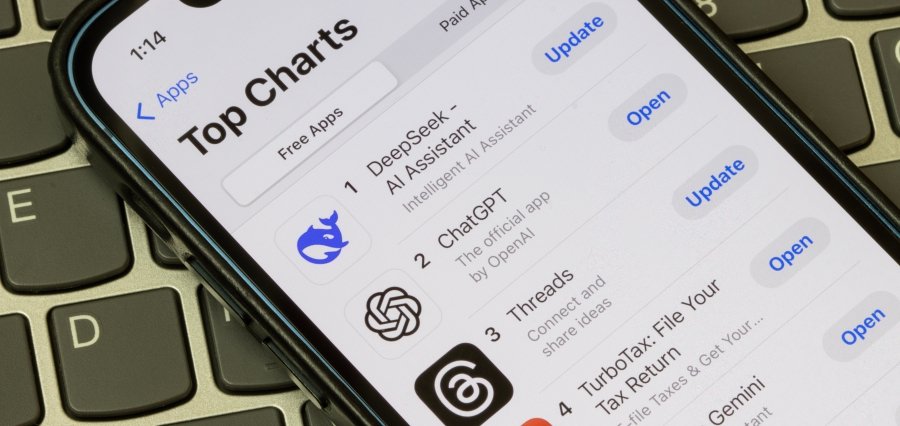
Free AI is artificial intelligence tools and platforms available free of charge to all. These include chatbots, image generators, coding assistants and document summarizers. Companies like Google, Meta, Microsoft, and OpenAI have released free versions of their AI products to the public.
Free AI does not mean cheap AI. Behind every free tool sits an enormous infrastructure of specialised chips, data centres, and engineering teams. The companies offering these tools spend hundreds of millions of dollars keeping them running. They absorb that cost deliberately and strategically. To understand why America is giving you free AI, you first need to understand what that cost actually looks like.
Where It All Started
The story begins in 1950, when British mathematician Alan Turing asked a deceptively simple question: Can machines think? That question became the foundation of an entirely new field. Six years later, American computer scientist John McCarthy coined the term Artificial Intelligence at a conference at Dartmouth College in New Hampshire.
Progress through the 1960s and 70s was real but slow. Computers lacked the power and data needed to go further. Funding dried up twice, in periods researchers call the AI winters, when the gap between what AI promised and what it could deliver became too wide to ignore.
Then in 2012, a deep learning model called AlexNet outperformed every other system in an image recognition competition by a margin that stunned the research community. That moment signalled that deep learning was the path forward. Five years later, Google researchers introduced the Transformer architecture, which became the backbone of every major AI system built since. ChatGPT, Claude, and Gemini all trace their foundations to that work.
In late 2022, OpenAI released ChatGPT publicly. It reached one million users in five days and one hundred million within two months. No consumer application had ever grown that fast. The era of free AI had officially begun.
Why America Is Giving You Free AI
Understanding why America is giving you free AI starts with the business model, but does not end there.
The surface answer is freemium conversion. The free version of any AI tool is essentially a capable demonstration. A percentage of free users will always upgrade to a paid plan. Even a small conversion rate across tens of millions of users generates substantial revenue.
But why America is giving you free AI goes deeper. Every conversation a free user has generates data. That data helps the company improve its model, attract more users, and generate more data. It is a self-reinforcing cycle, and free access keeps it turning. Users are not just customers. They are contributors to a research process that the company benefits from enormously.
There is also the question of market control. Offering something powerful for free makes it extremely difficult for competitors to charge for something similar. By the time a rival builds a comparable product, the dominant players have already locked in hundreds of millions of users unlikely to switch.
Then there is the bigger picture. American technology becoming the world’s default standard carries influence well beyond revenue. When billions of people use American AI tools daily, those tools shape how information is accessed and how decisions are made. That reach is a form of global power that governments and corporations both understand clearly.
The Chip Question
None of this works without hardware. AI systems require specialist chips that perform millions of calculations simultaneously. The companies designing the most advanced chips are almost entirely American. NVIDIA, AMD, and Intel sit at the centre of global AI infrastructure.
This gives American companies a structural advantage that is genuinely difficult to replicate. Building AI at scale requires chips. Controlling chip design means controlling who can build serious AI and at what speed. It is also central to understanding why America is giving you free AI rather than any other country leading this charge. Free AI is only possible because the companies offering it have the infrastructure to support it, built over decades with significant investment.
What Free AI Means for the Rest of the World
For individual users, free AI has been genuinely democratising. A student in a small town now has access to tools previously available only to well-funded organisations. A small business owner can handle tasks that once required an entire team. A researcher in a developing country can access analysis that geography previously made difficult.
The question of why America is giving you free AI has an answer that is both generous and calculated. It is generous because the access is real and the benefits are tangible. It is calculated because the companies behind it understand exactly what they are building by giving it away.
Conclusion: Nothing This Powerful Is Ever Truly Free
Free AI has changed what is possible for hundreds of millions of people. It has lowered barriers and put genuinely useful technology into the hands of anyone with an internet connection. But free AI exists within a larger story of competition, strategy, infrastructure, and influence. The tools are free. The thinking behind them is not. And why America is giving you free AI while absorbing billions in costs is a question every user deserves to understand. Knowing the answer does not make the tools less useful. It makes you a smarter user of them.