
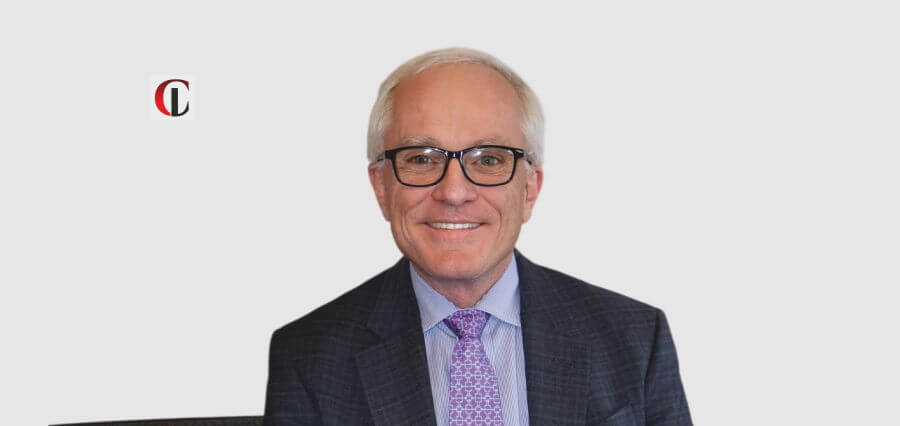
Some ambitions begin with a simple thought: a major energy discovery may still be waiting to be found. That idea has shaped Michael Binnion’s career. Exploration, innovation, and perseverance have defined his work, from the search for a major gas field to the development of innovative energy technologies. Today, he serves as President and CEO of Questerre Energy Corporation. The company is focused on developing a significant gas discovery in Quebec. At the same time, it is advancing oil shale technology that could make large hydrocarbon resources economically viable.
Michael sees himself not simply as an oil and gas executive, but as a founding shareholder who helped build Questerre around a distinct exploration philosophy. The company was established with the goal of discovering a massive gas field rather than pursuing a conventional resource. This approach led Questerre to focus on the Utica shale in Quebec, where it drilled a confirmation well in 2009 and began development the following year. However, the path to commercialization was not easy. Over the next 16 years, the project was shaped by environmental protests, government reviews, political considerations, and concerns about public perception.
Long-Term Growth Strategy
While Quebec has been a major focus for Questerre, the company has also developed a significant opportunity in oil shale. For years, Questerre has worked on proprietary refining technology designed to extract oil from shale at a commercially viable cost. The industry has faced challenges in developing oil shale on a large scale.
Questerre recently completed an acquisition in Brazil. The company plans to use an existing refinery, mine, and gas plant to commercialize its technology. Michael views the opportunity as significant. Conventional oil reserves are measured in billions of barrels, while oil shale resources can reach into the trillions. The Green River Shale in the United States alone is estimated to contain more than three trillion barrels of oil. It has been described as the largest accumulation of hydrocarbons in the world.
Supporting these long-term projects is Questerre’s conventional oil and gas business in Western Canada. The company has maintained this operation throughout its history. This business provides employment for skilled workers and generates the cash flow needed to support Questerre’s larger projects in Quebec and Brazil.
Leadership and Capital Discipline
Questerre now employs about 900 people. For most of its history, however, the company operated with a core team of about ten employees. This structure shaped Michael’s approach to technical leadership. His background is unconventional for the role. He trained in finance, qualified as a chartered accountant, and worked in the high-tech sector. He later co-authored a peer-reviewed paper on geology. Much of his technical knowledge has been self-taught through direct experience with complex problems that had no established solutions. “When there is no roadmap, I believe leaders must be willing to create one,” he says.
Michael has made this responsibility a central part of his role as CEO. He also relies on technical staff with research-oriented mindsets who are comfortable solving unfamiliar problems. He says many of Questerre’s major technical decisions have been guided directly by his leadership rather than fully delegated to specialists.
Questerre takes a different approach to capital allocation across its assets. In Saskatchewan and Alberta, the company focuses on projects that can recover their investment within the first one or two years of production. A vice president of operations with experience in project evaluation now oversees much of this work.
The strategy changes for Questerre’s flagship Quebec asset, which includes a 20 trillion cubic foot discovery. At this scale, the difference between a $5 million and $6 million exploration well is not considered decisive. The primary objective is to determine whether the company can identify the resources it is targeting.
Efficient drilling allows Questerre to pursue more prospects with the available capital. Drilling two wells also creates more opportunities for a successful discovery than drilling one. For a project of this magnitude, capital efficiency supports the broader exploration strategy rather than defining its outcome. “When proven methods are no longer enough, innovation becomes essential to reaching the opportunities ahead,” he says.
Technology-Driven Approach
Michael’s experience with high-tech startups before entering the energy sector continues to shape his view of the industry. He argues that oil and gas can be more technologically demanding than the technology sector itself. The industry requires expertise in geology, geophysics, drilling, production, and refining. Each area involves complex and specialized technology.
He also challenges the view that oil and gas is an outdated industry. According to him, many production methods used in the early 1900s are no longer relevant. The resources being developed today require new engineering methods and advanced technology. “Finding a giant resource requires the courage to look beyond what has already been tried,” he says.
Questerre’s history in Quebec reflects this approach. The company adapted techniques that had proven successful in the Appalachian Basin in the United States to the local geology. Michael refers to this process as “imitation innovation.” When no established method exists, such as with Questerre’s oil shale refining technology, the company relies on direct experimentation. This approach involves greater risk, but it can also create opportunities that conventional methods cannot achieve.
The company’s pursuit of its 20 trillion cubic foot gas discovery reflects this philosophy. Michael argues that a discovery of this scale would not have been possible by simply repeating methods that others had already tried.
Public Policy and Energy Advocacy
Michael developed an interest in public policy in his thirties. He volunteered with the Canadian Taxpayers Federation and later became chair of the organization. During his time there, he says he helped rebuild its strategic plan and strengthen its finances.
That policy experience became closely connected to his business interests when Questerre’s Quebec project faced sustained public opposition. The resistance was difficult for him to understand. Questerre had engineering data on pressure and water management. It also had practical experience with the process and access to peer-reviewed research that found no systemic risk from properly managed hydraulic fracturing.
Despite this evidence, public skepticism continued. The gap between technical evidence and public perception led to the creation of Modern Miracle Network. The advocacy organization focuses on improving public communication about the oil and gas industry. The organization has since sought to influence Canada’s broader energy discussion. Michael points to changing public attitudes in Canada, the United Kingdom, and Germany. He says all three countries faced similar pressures from global events, including the war in Ukraine, conflict involving Iran, and growing concerns about energy affordability and security. “Business leaders have a responsibility to explain the value their industries bring to society,” he says.
According to Michael, Canada’s public discussion around energy changed more significantly than the United Kingdom’s, despite its North Sea oil and gas resources. He attributes the difference to sustained efforts to communicate differently about the industry. He believes these efforts have helped improve public acceptance of oil and gas development, including Questerre’s project in Quebec.
Advice for the Next Generation
When asked what advice he would offer emerging business leaders who want to engage in public policy, Michael begins with a warning about the free-rider problem. If everyone assumes someone else will speak for the industry, no one takes responsibility. He compares public advocacy to civic duty. Just as citizens have a responsibility to participate in elections, business leaders have a responsibility to communicate about the issues affecting their industries.
He recommends that leaders choose an approach that matches their skills and comfort levels. This could include speaking at a university, working with the media, or helping employees understand and explain the company’s work.
Leaders can also contribute through institutional support. Those who are not comfortable with public advocacy can support organizations such as Modern Miracle Network that focus on industry communication. The goal is active participation, with each leader contributing in a way that fits their abilities.
Vision for the Next Decade
Looking five to ten years ahead, Michael identifies two goals he hopes to achieve before stepping down as CEO. The first is the development of Questerre’s Quebec project. Questerre has drilled 16 of the 30 wells completed in the play and has conducted extended tests on several of them. These results have increased the company’s confidence in a significant discovery. Further drilling and testing are still needed to determine its full scale.
The project could also have a broader economic impact. Full development is expected to create about 5,000 direct jobs and support related industries such as fertilizer, methanol, and LNG plants. These facilities would use the project’s gas supply. Michael argues that greater development of Quebec’s hydrocarbon resources could strengthen the province’s economic independence and deepen its economic ties with Alberta and the rest of Canada.
The second goal is to commercialize Questerre’s oil shale refining technology. The technology has been developed through years of testing and a large field trial. It is fully patented and represents an estimated $200 million in investment over two decades. The company believes the technology could reduce refining costs by about 50 percent. This could make large oil shale resources commercially viable.
Questerre’s newly acquired Brazilian asset provides infrastructure for this effort. The site includes an existing refinery, mine, and gas plant. Its refining technology dates to the 1970s and remains functional, but its high costs have limited its potential for large-scale use. The two projects represent the company’s main long-term ambitions. “The next decade is about turning years of exploration, technology, and preparation into meaningful results,” he says. One focuses on developing a major gas resource in Quebec. The other seeks to apply new technology to the global oil shale market. Both reflect initiatives that Questerre has spent years preparing to pursue.