
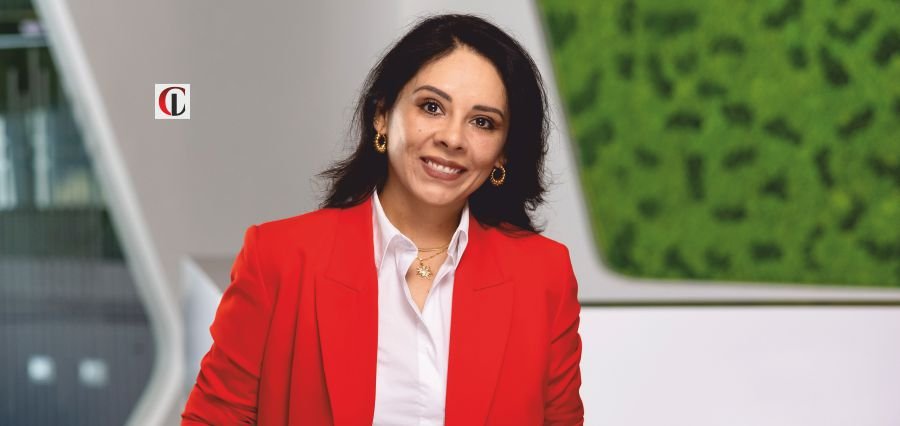
More than 18 years ago, a young professional embarked on a journey that would change her life forever and ultimately redefine not just her career but also the healthcare systems in Chile. She is none other than Denisse Garnica, the Partner | Head of Health, Insurance & Public Sector at NTT DATA Chile.
Leaving behind her native Bolivia, Denisse entered a new world with fresh opportunities and challenges. With an engineering degree from industrial engineering and a family highly invested in public service, Denisse’s path would take a dramatic turn into healthcare technology and leadership. Here is an inspiring story of how the vision of one leader, dedication to public welfare, and faith in the role of innovation served to change healthcare delivery in an ever-evolving world.
The Early Beginnings: A Foundation in Engineering and Public Service
Since childhood, the shadow of public service hung over Denisse’s life. Her parents’ professional lives in the Bolivian public sector influenced her worldview on leadership and community influence. With a degree in industrial engineering, she started her professional life in operations management, an area that gave her a strong background in process improvement, resource allocation, and problem-solving. Yet it was the marriage of her technical acumen and her ambition to work towards the common good that would lead her into the healthcare field.
The break came when Denisse became a part of NTT DATA, then called Everis. As a public sector consultant, her very first big project would leave an indelible mark on her professional life as well as the lives of countless people. Charged with developing the State Financial Management System (SICFE), she had the daunting task of overhauling the manner in which public financial management existed in Chile. More significantly, the project enabled her to investigate the scope for enhancing citizens’ lives with public services that were more efficient and accessible, like healthcare.
The Power of Technology in Transforming Healthcare
Denisse’s work with SICFE ignited an awareness that would chart her professional course: technology, employed imaginatively and judiciously, can make a direct difference in people’s lives. As she transitioned into leadership positions, she began to concentrate on how digital transformation had the potential to transform the healthcare industry.
The COVID-19 pandemic offered a unique chance for change, forcing the healthcare system to the edge. Leading this change was the emergence of telemedicine, which allowed for remote consultations and extended the reach of healthcare services directly to patients’ homes. A standout instance was the Arturo Lopez Perez Foundation (FALP), a top oncology center, which adapted in no time to the requirements of the pandemic through the deployment of telemedicine solutions. This rapid innovation not only facilitated continuity of care but also tore down longstanding access barriers, especially for individuals with complex healthcare needs.
With Denisse’s leadership, NTT DATA toiled day and night to put in place digital solutions that helped healthcare organizations during their fight against the pandemic. The question was evident: how could they use technology to augment patient care and advance health outcomes? The response was through speed innovation and sectoral collaboration, public and private.
Leadership in Crisis: A Focus on Collaboration and Innovation
When the pandemic struck, most leaders were presented with the gargantuan challenge of facilitating their teams to work as efficiently as before without compromising the quality of service. For Denisse, it wasn’t merely ensuring the continuity of business operations—it was about creating new approaches to assist society in dealing with an unprecedented crisis.
During this time, her philosophy of leadership was based on teamwork and taking risks. She knew that to go forward was to do it through regional collaboration where knowledge and resources were shared to assist the healthcare system in adapting to the increase in demand. Through embracing technology, NTT DATA supplied key tools and solutions free of charge to enable public institutions to navigate the pandemic, highlighting the firm’s focus on social responsibility.
The crisis also showcased the need for flexibility and innovation. For instance, NTT DATA launched new platforms and digital tools that ramped up telemedicine adoption at a faster rate, allowing hospitals and clinics to increase their capability to treat patients. This innovation was not simply about offering an interim solution—it was about rewriting the future of healthcare delivery.
Overcoming Challenges: The Role of Technology in the Healthcare Workforce
One of the greatest challenges in healthcare’s digital evolution is overcoming people’s resistance to change. The belief that technology will eliminate jobs is still prevalent, but the truth is that technology in healthcare is designed to enable, not replace, the workforce. Successfully integrating digitally requires assisting members of staff through the process and facilitating the growth of digital skills.
As a leader, Denisse used an incremental style for introducing new technology. Instead of imposing everything at once, she saw the need to involve members of her teams early on in the process. Proof-of-concept testing was done to be able to demonstrate the tangible returns of new tools so that everybody could see how these innovations were going to benefit their work.
The use of technology in healthcare also necessitated a wider emphasis on education and skill-building. Digital literacy was at the center of her approach, as she called for early digital education to enable future generations to meet the challenges and opportunities that lay ahead. By establishing a foundation of digital fluency, Denisse felt that society would be more able to cope with the challenges of a more digital world.
The Interoperability Power in Healthcare Systems
As the healthcare system progressed, the requirement for interoperability became more apparent. Interoperability in healthcare means that various systems and organizations can exchange and utilize information with ease. This was one of the biggest challenges that made patient care inefficient, as patients were required to repeat their medical history and personal details at different points of care, leading to wasted time and delayed treatments.
The demand for more effective and streamlined care prompted Denisse to advocate the significance of interoperability. She endeavoured to close the gap between public and private healthcare providers so that information could be readily exchanged between systems. This vision of an integrated healthcare system was important for enhancing patient care, minimizing inefficiencies, and making sure that resources were utilized in the best possible manner.
Collaboration with The Arturo Lopez Perez Foundation
Perhaps the standout achievement of Denisse’s time at NTT DATA was the deployment of telemedicine technologies to treat oncology patients in the Arturo Lopez Perez Foundation (FALP). The pandemic had pressed the healthcare world into action as fast as any war, and FALP required a solution to keep on treating patients needing prolonged treatments.
In a few weeks, Denisse’s team co-created a telemedicine solution that fit perfectly with FALP’s electronic medical record (EMR) system. The outcome was nothing less than revolutionary. Between April and June, over 5,000 telemedicine sessions were held, serving over 3,700 patients. Telemedicine represented 40% of all care at FALP by June. This achievement not only proved the potential of technology in resolving healthcare issues but also indicated the possibility of long-term transformation in the delivery of healthcare services.
The Role of Leadership: Mentoring and Developing Teams
Throughout her professional life, Denisse has been devoted to building her team. Being a leader, she knows that building a culture of resilience, empathy, and trust is vital to success. Leadership for her is not about decision-making—it’s about motivating and leading people toward a shared vision.
She focuses heavily on mentoring and guiding her team members. Either through official programs such as the Upskilling program or just casual interactions in the office, Denisse sees to it that her team feels empowered to experiment, to learn from failure, and to develop as both professionals and individuals. Leadership, for her, is about putting people in a position where they can excel and help the organization succeed as a whole.
A Vision for the Future of Healthcare
Looking to the future, Denisse’s vision for healthcare is unmistakable: a system founded on interoperability, patient-centric care, and a robust integration of technology. With ongoing reliance on digital solutions, healthcare organizations can provide more efficient, accessible, and tailored care. But technology must never take the place of the human element in healthcare—it must augment it, making healthcare professionals more efficient and allowing patients to receive the highest level of care.
As a leader, her path is not yet done. She continues to be fueled by a passion that transcends business achievement. Each project, each choice, and each setback is filtered through the prism of enhancing lives. Ultimately, success is not simply measured by projects accomplished or innovations brought forth, but by lives enhanced in the process.
With resilience, compassion, and an unwavering commitment to innovation, she continues to forge the future of healthcare, making sure that technology is not just a means of efficiency but a way of advancing the human experience in an ever more complicated world.