
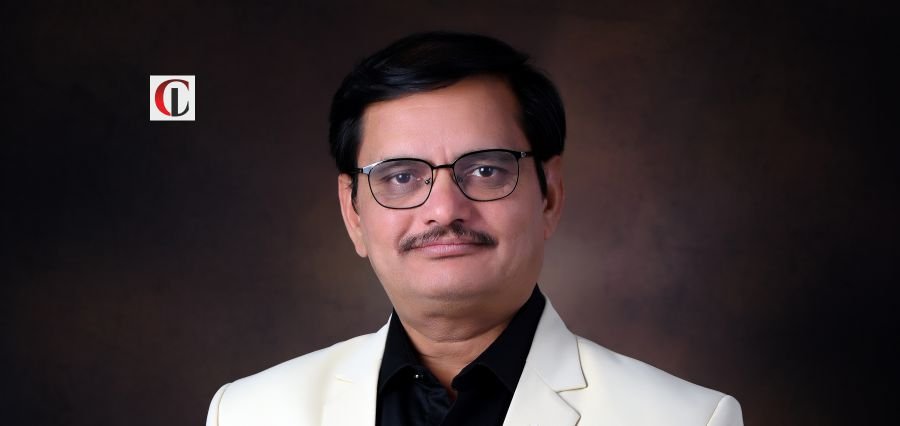
Even before discussions surrounding Industry 4.0 and experiential learning became widely known, Dr. Prakash Sulakhe was raising an impactful question: what is the fate of students after the lab is over? This question has not only marked the course of a career but also at the same time being a core aspect of the educational process.
As the Director of CAD-MECH Engineering Pvt. Ltd., he has guided the business to be more than just an equipment supplier but to be a partner in engineering education for a long time. His professional path is characterized by gradual movement from the precision-oriented engineering towards the systems-level thinking, where technology, pedagogy, and accessibility come together. He has always tried to measure success not only by the number of installations but also by the improvement of learning outcomes inside the classrooms and laboratories at various places in India.
The organization under his direction has gone for modular design, smart simulations, and future-ready lab technologies, all of which are influenced by direct interaction with faculty and students. His manner combines technical strictness with what he would always refer to as educational empathy ensuring that intricate systems are still simple, economical and effective for users at different levels.
Grounded, reflective, and forward-looking, Dr. Prakash Sulakhe stands for a new breed of industry titans who perceive growth as sustainability rather than speed, and innovation as meaningful impact rather than novelty. He still is on his journey of aligning engineering precision with the greater nation-building through education goal.
Beyond Manufacturing: A Systems Approach to Educational Impact
Dr. Prakash’s leadership philosophy breaks from traditional metric-driven manufacturing. Where others see product specifications and installation numbers, he examines long-term educational outcomes. This systemic thinking shapes how CAD Mech develops its lab technologies, ensuring they remain adaptive, modular, and future-ready as industries evolve.
“Leadership recognition is not about personal validation. It is a reminder that our decisions impact thousands of students, faculty members, and institutions across the country,” he explains. This perspective transforms every design choice, every technology integration, and every customer interaction into an opportunity to shape how engineering education evolves in India.
His approach combines engineering precision with what he calls educational empathy, a rare balance that ensures technically sophisticated equipment remains accessible and effective for learners. He emphasizes to his team that their end user isn’t just the purchasing institution but the individual student. A technically perfect machine that confuses learners has failed its purpose, regardless of its specifications.
Innovation Grounded in Real Classroom Challenges
CAD Mech’s integration of cutting-edge technologies, IoT sensors, augmented and virtual reality modules, and advanced simulation tools stem from practical problem-solving rather than trend-chasing. Dr. Prakash roots his R&D leadership in direct observation, encouraging his engineering team to spend substantial time in educational institutions watching how faculty teach, how students interact with equipment, and precisely where learning breaks down.
“We don’t innovate for novelty; we innovate to solve real classroom and lab challenges,” he states. This real-world exposure proves far more valuable than theoretical trend forecasting, ensuring that every technological advancement addresses genuine educational needs.
Accessibility drives his innovation strategy. Advanced technologies must enable educators rather than intimidate them. CAD Mech designs AR and VR modules as layers atop existing lab concepts, allowing faculty to adopt them gradually rather than facing wholesale transformation. The company’s simulations replicate authentic industrial conditions but employ simplified interfaces that remain intuitive for students encountering complex systems for the first time.
The approach extends across CAD Mech’s operations. Engineers collaborate with educators and trainers in cross-functional teams, designing equipment that achieves both technical robustness and pedagogical effectiveness. This collaboration ensures that precision brings credibility while empathy delivers relevance.
Democratizing Advanced Training Through Strategic Design
Balancing industrial realism with affordability represents a central challenge for educational equipment manufacturers. Engineering institutions operate under significant budget constraints while aspiring to deliver industry-relevant training. Dr. Prakash addresses this tension through functional realism rather than cosmetic replication.
Instead of creating expensive full-scale copies of industrial machines, CAD Mech identifies core learning objectives, control logic, process flow, diagnostics, safety protocols and designs trainers that deliver those specific experiences efficiently. The company employs modular design principles, enabling institutions to begin with basic setups and upgrades incrementally as funding becomes available or requirements evolve.
“Affordability, for us, is not about reducing value. It is about optimizing learning outcomes per rupee invested,” he clarifies. This philosophy makes advanced technical training accessible to institutions across diverse economic contexts without compromising educational depth or industrial relevance.
The modular approach serves another critical function: it allows CAD Mech’s solutions to grow alongside institutional capabilities and ambitions, creating sustainable pathways for equipment adoption rather than forcing all-or-nothing investment decisions that many colleges cannot accommodate.
Building Partnerships That Extend Beyond Installation
Dr. Prakash views equipment installation as the beginning of a relationship rather than a transaction’s conclusion. He maintains personal engagement through regular feedback loops with institutions, listening to faculty experiences, reviewing student outcomes, and understanding evolving needs as curricula and industry standards shift.
CAD Mech’s team conducts Faculty Development Programs, refresher sessions, and technical updates to ensure labs remain relevant and fully utilized years after initial installation. This consistent presence builds trust that transforms vendor relationships into genuine partnerships. When institutions recognize that CAD Mech stands beside them through service, training, and upgrades long after the sale, they view the company as an invested partner rather than a distant supplier.
“Long-term relevance comes from continuous engagement, not one-time transactions,” he observes. This philosophy drives retention across CAD Mech’s 700-plus installations and generates referrals that fuel sustainable growth.
Anticipating Industry 4.0 and Tomorrow’s Skill Demands
Dr. Prakash practices three leadership habits consistently: listening, learning, and long-term thinking. He actively seeks input from industry partners to understand emerging skill requirements, pursues continuous learning through research and dialogue, and encourages his team to design not merely for today’s curriculum but for tomorrow’s workforce.
CAD Mech aligns its lab development roadmaps with Industry 4.0 themes, automation, data integration, simulation capabilities, and smart manufacturing principles. Equally important, the company prepares faculty through comprehensive training programs, ensuring that technology adoption translates into meaningful skill development for students rather than remaining underutilized due to educator uncertainty.
Looking towards 2026 through 2030, he predicts that hybrid learning ecosystems will redefine engineering education. These systems combine physical labs with AI-driven simulations and remote access capabilities, democratizing high-quality training and allowing institutions to scale learning without proportional infrastructure expansion. CAD Mech invests in virtual labs, smart simulations, and faculty training platforms to lead this transformation responsibly, ensuring technology enhances rather than replaces human learning.
Learning from Failure and Measuring What Matters
When a lab solution fails to gain traction, Dr. Prakash treats the situation as a valuable feedback mechanism. His team investigates whether cost sensitivity, complexity, or faculty readiness caused the adoption barrier. Based on these findings, they simplify products, reframe usage through additional training, or pursue complete redesigns.
He recognizes that many innovations fail not because they lack value but because users remain uncertain how to integrate them effectively. Leadership in such moments means owning the outcome and guiding both the development team and the customer toward better alignment.
CAD Mech tracks metrics that reveal true educational value beyond conventional sales figures. The company monitors lab utilization rates, faculty adoption levels, student competency improvements, and feedback from accreditation visits. These indicators demonstrate whether their labs genuinely contribute to learning outcomes. They measure institutional return on investment not only financially but through improved placement readiness and enhanced academic confidence among graduates.
These outcome-driven metrics ensure CAD Mech maintains focus on educational impact rather than pure volume growth, a distinction he considers essential for companies serious about transforming education.
The Lessons of Sustainable Growth
Dr. Prakash candidly acknowledges a leadership decision he would revisit attempting to scale too quickly without sufficient emphasis on ecosystem readiness. That experience taught him that sustainable growth requires alignment among technological capabilities, faculty preparedness, and institutional vision. The lesson he shares with emerging leaders carries clarity: growth should be purposeful rather than rushed.
This wisdom now shapes CAD Mech’s expansion strategy, ensuring that rapid growth doesn’t outpace the company’s ability to support customers effectively or maintain the quality standards that built its reputation.
A Vision for Nation-Building
Dr. Prakash’s long-term vision extends beyond commercial success. He works toward having CAD Mech recognized not merely as a manufacturer but as a nation-building partner in engineering education. By empowering educators, inspiring students, and aligning academic requirements with industry requirements, he aims to contribute to a technically skilled, confident, and future-ready generation.
“Engineering education must evolve from rote learning to experiential mastery. At CAD Mech, that belief guides every decision we make,” he asserts.
His leadership demonstrates that manufacturing companies in the education sector can pursue purposes larger than profit margins. By keeping students at the center of innovation, maintaining consistency in partnerships, and measuring success through learning outcomes, Dr. Prakash Sulakhe charts a distinctive path forward, one where precision engineering serves educational transformation, and business growth aligns with national development.