
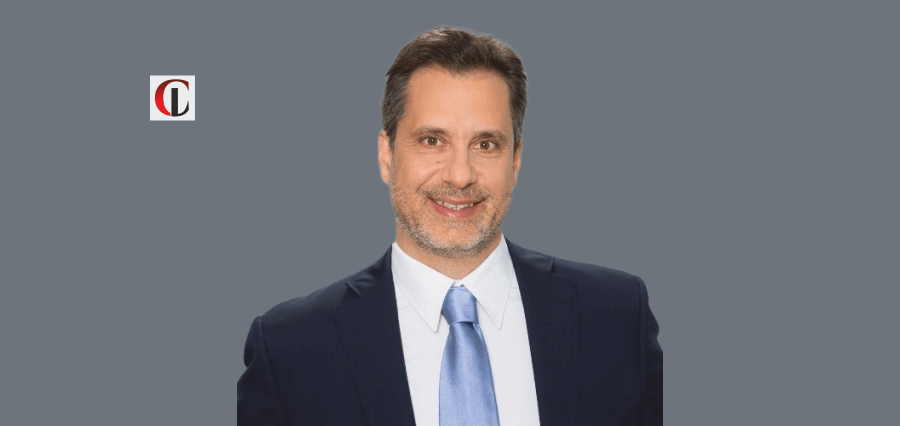
With technology and sustainability converging to define the future of the global enterprise, vision driven leadership is not a choice; it’s a necessity. Not only cognizant of the complexities of environmental, social, and governance (ESG) expectations, pathbreaking leaders of this age also know the competencies that must be enacted to instill sustainability into business DNA with success. Amongst such visionaries, Eugenio Longo is a very powerful figure in the chemical and digital realms, spearheading the movement towards a greener, more efficient world.
Early Foundations: A Childhood Full of Perception and Nature
Growing up amidst the Laurentian forests of Québec, Canada, was where Eugenio’s path to sustainability started. At a young age, he would see hunters and campers littering metal cans with no regard whatsoever—something that was both toxic to the environment and to human health. He was cautioned away from eating mushrooms around such dumps because the metals will be certain to build up in the fruiting bodies and thus would be hazardous to ingest. This experience left him with a permanent impression of human influence on the world, one that would guide his career philosophy and drive in the long run.
Academic Pursuits: Intersection of Engineering and Ecology
Eugenio’s life at university was distinguished by an interest in how technology and the environment were connected. During his undergraduate degree in Chemical Engineering at McGill University, he had a pivotal elective course: Economics of Ecology. This exposure, after the pioneering book “Our Common Future” of the World Commission on Environment and Development, had exposed him to the dogmas of sustainable development. The convergence of environmental interests with economic plans resonated within Eugenio, toward a career tension between scientific rigor technology, progress, growth and concern for global well-being.
With his joining the industry as a polymer science and technology chemical engineer, Eugenio was in the plastics industry that was growing at an impressive pace. The early 1990s were the time when plastics transformed industries from food packaging and vehicles to construction, healthcare, and fashion. Eugenio’s early professional contribution was toward substituting conventional materials with cost-effective and resource-effective plastics, triggering innovation and competitiveness into industries.
His field of endeavor was research and development, product innovation, and marketing, and thus he enjoyed a broad horizon on material potential and difficulty. In 2007, with fifteen years of progress in this high-speed industry, Eugenio came to understand the unforeseen impact of plastic popularity. The issue of the environment, specifically with regards to recycling and ocean pollution, arose to the top. Recognizing these new challenges, he directed his attention to activities that would render plastics greener—developing recycling programs, carrying out life cycle analyses, and creating evidence on the right use of polymer materials.
Shaping Policy and Corporate Strategy: The Borealis Decade
Eugenio’s increasing policy and sustainability exposure reached its zenith in 2012 when he was hired as Head of Sustainability & EU Affairs at the Vienna-headquartered top European manufacturer of plastics, Borealis AG. Grudgingly, he moved to Brussels and was deposited in the center of European policymaking amidst goliath regulatory upheaval.
Eugenio led Borealis’s sustainability and advocacy strategies agenda and in sync with the ambitious blueprints of the European Green Deal and making regulatory policies possible at an enabling scale. Eugenio’s role included embedding sustainability in all company processes, developing a reporting framework, setting targets, minimizing environmental footprint, and driving circular economy thinking across the company.
Throughout this decade, Eugenio developed expertise in corporate sustainability reporting, regulation of risk assessment, enterprise-wide implementation of sustainability strategy and building ecosystems to drive the circular economy. His leadership led Borealis to the vanguard of sustainable innovation, with a positive and impactful green responsibility for cultural orientation.
Transition to Tata Consultancy Services: Digital Transformation Meets Sustainability
Eugenio, in 2021, started anew as he transitioned to Tata Consultancy Services (TCS), attracted by the company’s digital prowess and commitment to long-term ESG agendas. TCS appreciated the depth of his experience in sustainability, and Eugenio wanted to leverage digital technology as a force of systemic accelerated change at scale.
Under the leadership of Eugenio at TCS, the company’s objectives have been aligned with Europe’s most advanced Green Deal Directives and Regulations, specifically the Corporate Sustainability Reporting (CSRD), Supply Chain Due Diligence, Taxonomy, Digital Products Passport and Deforestation. Through conducting comprehensive gap analyses, he found that TCS was already well positioned to satisfy such state-of-the-art consulting and solutioning capabilities, considering its years of dedication to stakeholder engagement with sustainability leading voices such as the Global Reporting Initiative (GRI).
Eugenio’s management ensured that TCS’s sustainability agenda was not only compliance-oriented to regulatory requirements but was actively integrated into the company’s business objectives. His visionary leadership ensured TCS was a pioneer in reporting sustainability, driving industry standards, and proving that corporate goals and regulation compliance were not mutually exclusive.
Digital Solutions for a Circular Economy
One of Eugenio’s assumptions is the basis that makes digital transformation a top role in enabling scalability to sustainability. He defines the constraints of the linear economy through extraction, transformation, and wastage of resources and advocates for shifting to circularity where waste is used as an input to new value creation.
Eugenio highlights the pivotal role of digital platforms in orchestrating this change. With collaborative engagement among participants in the supply chain, simple access to real time data, and optimization of resource flows, digital technology makes it possible to develop ecosystem economies. Digital platforms have the ability to offer industries the capacity for reduced emissions, waste minimization, and natural system recovery, thereby enabling long-term prosperity and resilience.
TCS, thanks to leaders like of Eugenio, has created and launched several pioneering sustainability innovation and thought leadership both within customers and society in general, across the world. Partnerships with sustainability leading clients, partners and NGO’s have that deliver tangible energy efficiency and environmental outcomes.
Vision for the Future: Driving the Sustainable Technology Revolution
Eugenio’s green future vision for the technology industry is ambitious but practicable. According to him, while digital technology can be an immense opportunity as a driver of change towards sustainability, simultaneously it has to be dealt with in such a way that it minimizes its own environmental impact. The spread of data centers, devices, and networks has generated extra energy use, thereby making green IT and sustainable digital infrastructure compulsory.
In TCS, Eugenio is driving initiatives set to net-zero carbon emissions targets, including converting all its operations to renewable energy and compensating for the balance of emissions that remains. It isn’t solely in the company’s control, however, TCS collaborates with customers to create and deliver digital platforms that facilitate circularity, resource productivity, and social value across industries.
Eugenio’s vision is of an economy in which technology companies not only set the bar themselves for their own sustainability practice but also serve as source guides and catalysts of customers’ transformational journeys. Through collaboration, innovation, and stewardship, he is charged with envisioning how technology can enable a more just and regenerative economy.
The Human Dimension: Values, Mentorship, and Personal Drive
Aside from his technical skills and strategic capacity, Eugenio also truly wants to shape the next generation of sustainability leaders. To him, true change is not only created by policy and innovation but also through the creation of a responsible, empathetic, and learning culture.
In his professional life, Eugenio has encouraged young professionals to venture into sustainability with intellectual vigor and curiosity. Eugenio emphasizes the significance of transdisciplinary thinking and calls upon young leaders to lead the way and establish interfaces between engineering, economics, and social sciences. Eugenio’s advice is based on an innate philosophy that sustainable change involves not just technical solutions but a paradigm shift in the mind.
Eugenio’s intrinsic motivation stems from planetary stewardship and a belief that individuals as a collective can make the world a better place. He tends to look back at his youth growing up in the Canadian bush, where he learned from nature’s harmony and resilience. This informs his philosophy of leadership, which rests on humility, flexibility, and tireless pursuit of excellence.
Impact and Legacy: A Purpose-Driven Model of Leadership
Eugenio has, throughout his career life, been a living embodiment of the purposeful leader—aligning the synergy of technical competence and profound passion for the world and society. From Québec’s forests to the leading edge of international sustainability, the path is one of rare synergy of personal passion and professional competence.
Eugenio’s contribution not only questioned the sustainability practices of top companies but influenced the global debate on the role of business in addressing intricate environmental and social issues. His movement towards evidence-based decision-making, open disclosure, and stakeholder engagement has become a benchmark for corporate governance and accountability.
At TCS, Eugenio continues to inspire teams and partners alike to adopt sustainability as a source of innovation, a hallmark of resilience, and the driver of competitive success. His leadership is marked by an unstoppable search for solutions that balance economic growth with ecological integrity and social welfare.
Shaping the Future of Sustainable Business
Eugenio’s life is testimony to the transforming power of vision, professionalism, and integrity. As the world struggles with unendurably serious environmental and social dilemmas currently, his work places a sharp focus on the need to integrate sustainability in all business planning and operations.
With information and sustainable revolutions meeting, Eugenio and other like-minded visionaries are approaching a future of prosperity and accountability hand in hand. With his dynamic enthusiasm and strategic vision, Eugenio is not only molding the future of the organisations that he works with but also calling out to the next generation of leaders to create a more sustainable and equitable world.