
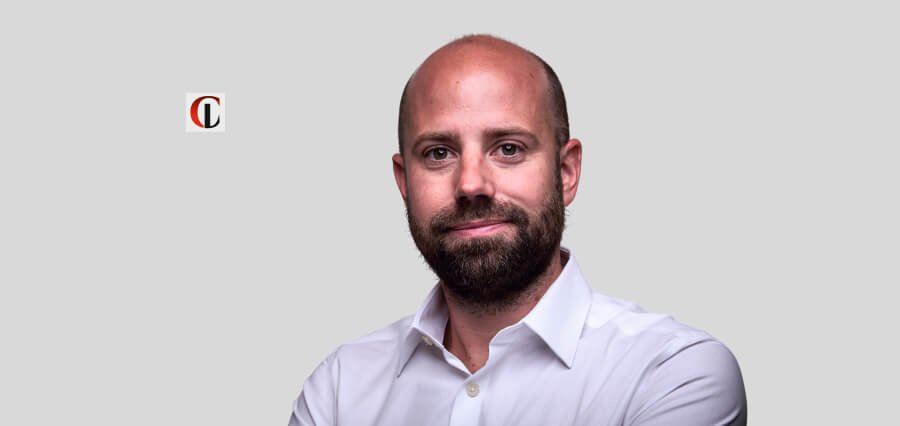
The facilities that move goods across continents, the systems that track products from origin to shelf, the digital infrastructure that keeps modern supply chains from unravelling, none of it works without someone who understands both the engineering behind it and the human beings operating within it. That dual understanding sits at the heart of Philippe Demarche‘s leadership philosophy, and it is what has made him one of the most consequential Managing Directors in the technology-driven world of connected supply chain solutions.
At Zetes, a company at the forefront of supply chain visibility, traceability, and intelligent automation, Philippe Demarche leads with a clarity that comes from years of genuine experience rather than inherited theory. His journey from engineering-focused professional to people-centred strategic leader tracks closely with the broader transformation of the technology industry itself, faster, more complex, more interdependent, and ultimately more human than it might first appear.
An Engineering Mind That Grew into a Leadership Vision
Philippe’s professional identity begins with his engineering background, and that foundation has never left him. Coming from an engineering background, he naturally sees organisations as interconnected systems, where every part influences the others. But the insight that defines his leadership did not come from that background alone. It came from what he learned as he moved beyond it.
Early in his career, he focused on solving technical challenges and driving projects from a purely operational standpoint. That approach delivered results, but it also had limits. As he grew into leadership roles, particularly during periods of rapid digital change, his understanding of what leadership requires underwent a fundamental shift.
That realization transformed his leadership philosophy into something more nuanced and more durable, a balance between strategic clarity and human connection. He now leads by helping teams navigate complexity, embrace new ways of working, and translate ideas into solutions that genuinely add value for customers. The systems thinking remains, but it is now applied to organisations and people just as readily as to technology and process.
He asserts, “My role is less about having all the answers and more about creating an environment where teams feel confident to explore, experiment, and take ownership.”
Reading the Landscape: Technology Trends That Will Define the Next Decade
Part of what makes Philippe a credible voice in the technology leadership space is his ability to read the direction of the industry without overstating or understating what is coming. He brings to that reading both the precision of an engineer and the judgment of a strategist.
He identifies connected and intelligent supply chains as one of the most significant shifts currently underway. Real-time visibility, driven by sensors, machine vision, and cloud platforms, is transforming how organisations track products, assets, and processes. AI is starting to support proactive, real-time decisions, from optimising logistics routes to predicting maintenance needs before issues arise. This is not a distant future. It is a present reality that organisations either engage with or fall behind.
The rise of automation and autonomous systems, particularly in warehouses and industrial operations, is another trend he watches closely. Digital ecosystems and interoperability round out his near-term outlook, with no organisation able to operate in isolation. And cutting across all of these trends is traceability, the capacity to answer, in real time, questions about product origin, authenticity, and sustainability that governments and consumers are increasingly asking.
He states, “Robots are not here to replace people but to take over repetitive, high-risk tasks, freeing teams to focus on higher-value work.”
Innovation Grounded in Reality
At Zetes, innovation is not a buzzword applied to projects in search of a purpose. It is a disciplined process that begins with listening. That customer-first orientation prevents the kind of technology-for-its-own-sake thinking that derails many innovation programmes before they deliver results.
The methodology Philippe describes is iterative and evidence-driven, identify a real challenge, pilot a solution in a controlled environment, measure impact against key metrics, and only then scale. This approach ensures that innovation translates into lasting business results rather than impressive presentations that never reach the operational floor.
The strategic alignment underlying all of this is equally deliberate. Every innovation initiative at Zetes connects to the company’s long-term priorities, developing local expertise in traceability, building connected supply chain solutions, and expanding intelligent automation capabilities.
He asserts, “True innovation is a blend of curiosity, disciplined experimentation, and strategic focus.”
Building Cultures That Can Handle What Is Coming
If there is one conviction that runs through every dimension of Philippe’s leadership, it is this, the culture of an organisation determines its capacity to adapt. Technology changes. Markets shift. Client expectations evolve. The organisations that survive and grow through those changes are the ones whose people are equipped and willing to change with them.
To build that culture at Zetes, he invests in skills development, cross-functional collaboration, and hands-on exposure to new technologies. Product-oriented clusters that bring together software, operations, and data analytics professionals give team members a more holistic understanding of how value is discovered, created, and delivered.
Leadership, in his view, sets the tone for all of this. The act of a senior leader asking questions, experimenting openly, and acknowledging what they do not yet know gives permission for everyone else in the organisation to do the same. That permission, extended consistently over time, becomes culture. Making technology tangible for people who work with it every day is another tool in his leadership kit, visible, felt improvements generate advocates.
He states, “Continuous learning is no longer optional. It’s essential.”
Navigating Disruption Without Losing Stability
The pace of technology change means that disruption is now a constant rather than an occasional event. Managing Directors who can guide their organisations through sustained disruption while maintaining operational reliability represent a rare and valuable kind of leadership. Philippe has developed a clear and practical philosophy for doing exactly that.
His approach favours incremental change rather than sudden, sweeping overhauls. By introducing technology in phases, teams can adapt, learn, and gain confidence before broader deployment. This phased approach reduces the risk of operational disruption while building the organisational muscle needed to absorb and sustain change over time.
Communication sits at the heart of his disruption management strategy. The why of change is as important as the what, and leaders who communicate only the mechanics of change while leaving the meaning unexplained create anxiety rather than momentum. Running alongside all of this is a consistent attention to operational reliability, that balance between innovation and stability is not a compromise. It is a discipline.
He states, “Core processes cannot be disrupted, so we introduce innovation in a way that enhances, rather than jeopardises, day-to-day operations.”
Responsible Innovation: Ethics, Governance, and Sustainability
As technology becomes more powerful, the responsibility to deploy it wisely grows in proportion. Philippe integrates governance, transparency, and accountability into every new technology initiative at Zetes from the outset rather than treating them as afterthoughts.
Sustainability is a central pillar of this approach. Technology can help reduce waste, improve resource efficiency, and provide visibility into the environmental impact of supply chains. Traceability solutions allow organisations to monitor sourcing, compliance, and sustainability in real time, turning environmental responsibility from an aspiration into a measurable operational reality.
He states, “Every technology deployment is assessed for fairness, privacy, and societal impact.” In a world where AI and data-driven systems are taking on larger roles in operational decisions, that kind of ethical governance framework is not a luxury. It is a requirement for any organisation that takes its responsibilities seriously.
Strategic Alliances: Innovation Does Not Happen Alone
Philippe is equally clear on the role that partnerships play in the innovation landscape. No organisation can develop all capabilities internally, especially in a space as complex as connected supply chains. Collaborating with technology providers, research institutions, and industry peers allows Zetes to combine complementary expertise and accelerate the delivery of impactful solutions.
Being embedded in a wider ecosystem also keeps the company connected to emerging trends and best practices, enabling it to stay ahead of market shifts and serve customers more effectively. Many breakthroughs occur at the intersection of disciplines, and partnerships provide that bridge.
He asserts, “Innovation increasingly happens together, not alone.”
The Next Generation of Technology Leaders
When Philippe turns his attention to the future of technology leadership, his perspective reflects everything that has shaped his own career. The next generation of technology leaders will need curiosity, adaptability, and a systems perspective. They will need to be comfortable making decisions in conditions of uncertainty, capable of connecting disciplines that have historically operated in silos, and grounded in an ethical awareness that keeps technology deployment aligned with human values.
He also raises a point that few leaders are yet discussing openly, the value of neurodivergent thinking in a world increasingly shaped by AI. As artificial intelligence handles more of the standard cognitive work, the thinking that diverges from the norm becomes more, not less, valuable.
His advice to professionals aspiring to shape the digital future is direct, “Stay curious, embrace learning, and focus on meaningful problems. Technology alone doesn’t create impact. People applying it thoughtfully do.”
A Leader Built for the Complexity Ahead
Philippe does not lead from a distance. He leads from an understanding, of technology, of people, of the systems that connect them, and of the responsibility that comes with the authority to shape how those systems evolve. At Zetes, he has built a culture of curiosity, a discipline of evidence-based innovation, and a leadership model that keeps human potential at the centre of every technological decision.
In an industry moving faster than almost any other, that kind of grounded, principled, people-centred leadership is not just admirable. It is essential.