
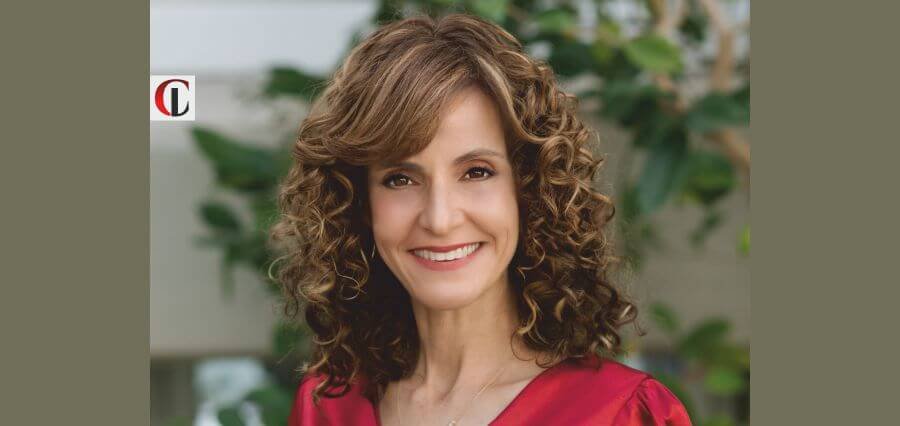
The world of signal processing and artificial intelligence is an ever-evolving arena, constantly pushing boundaries of what can be achieved, whether it’s through medical imaging or autonomous systems. Leading this revolution is Prof. Yonina Eldar, whose work has not only extended technological horizons but also worked tirelessly towards a more inclusive world.
A Visionary at the Forefront of Innovation
Prof. Yonina, whose name has come to represent pioneering signal processing and sampling breakthroughs, is an influential figure par excellence. Her recent win of the Israel Prize for Engineering in 2025 only speaks to her far-reaching influence. A global authority and Chair of the Council for Higher Education’s Committee for Gender Equity, her research delves far beyond the laboratory, reaching significant aspects of society. Yet, in the midst of professional achievement, she stays rooted as a mother of five.
Prof. Yonina’s research, as she describes, is about “information, artificial intelligence, and signal processing.” Her SAMPL lab creates “end-to-end systems,” from sensors to “novel approaches to information acquisition, processing, and storage.” One of the innovations is “reducing signal sampling,” allowing “extensive and accurate information” faster and more efficiently with “less energy.” This makes “technologies become smaller and be available to new applications,” covering “radar systems,” “autonomous driving cars,” and “advanced imaging systems for medical applications—such as ultrasound.” Prof. Yonina’s achievements & awards also mention environmental advantages, stating that “saving energy and storing information efficiently also helps environmentally.”
To Prof. Yonina, technological excellence goes hand in hand with a deep social purpose. “Our aim is not only to enhance the technology but to make it accessible,” she stresses. She thinks that scientific advances should render visible improvements in human lives, whether in “personal security, safety, healthcare and beyond.” Her research is guided by the vision of making high-tech “accessible in everyday life.”
Fostering Diversity and Inclusion in STEM
Prof. Yonina’s vision is not limited to that of the research community. She feels that “the people involved in research should come from all parts of society and understand that they can integrate and contribute, regardless of their background.” This vision, together with creating technology for the greater good, is her overall vision.
The SAMPL lab reflects this dedication to diversity, consisting of “30 researchers and students, male and female, from a range of disciplines: mathematics, physics, electrical engineering, computer science, hardware and software engineers, AI experts, algorithm developers, and individuals working in clinical medicine.” The lab also involves “about 15 undergraduate students,” providing them with initial exposure to scientific exploration. This multicultural mix, Prof. Yonina says, is at the heart of the lab’s “educational vision,” highlighting “working in a team, dreaming big together, and keeping diversity and high social energy.”
The Burden of Acclaim and an Appeal to Unity
The Israel Prize for Engineering was a pleasant surprise for Prof. Yonina. She remembers the surprise phone call from the Minister of Education and the subsequent tearful talk with the President and his wife. This acknowledgment was especially poignant “in the wider context of the difficult time we are going through in Israel.” The aspiration to envision a “strong, social, Zionistic” Israel and to “contribute to the country has become stronger recently,” she comments, in combination with the “hope that despite all the challenges, we can create groundbreaking research in Israel.” Prof. Yonina is absolutely convinced that “science and technology have the power to unite us and take us forward as a strong and prosperous society.”
Prof. Yonina’s role extends to public service as well. Being a Chair of the Committee for Gender Equity at the Council for Higher Education, she brings to fruition “a long period of informal activity targeted at bringing science into accessible vicinity for various and diverse populations.” She strongly advocates “exposure to science among young girls, especially those in the religious education system,” and has been working on “making higher education available to the ultra-Orthodox sector.”
Even further illustrating her social responsibility, Prof. Yonina co-founded the ‘Inbar’ association, which “empowers relationships to those with disabilities.” Her strong conviction is that “every person deserves the opportunity to succeed and find their place in society. regardless of their background or any challenge or disability.” Her group volunteers in earnest, participating in activities like assisting in centers for people with physical and mental disabilities, “painting, singing, dancing, decorating, packing food, and bringing joy to people.”
A Legacy Based on Contribution
Prof. Yonina was profoundly shaped by her parents’ philosophy of life a worldview grounded in contribution, purposeful action, and the continuous development of one’s abilities. Being brought up in an “unconventional religious Torah-oriented home” among seven siblings, a thread of commonality runs through them: “the belief in personal responsibility to use our talents to create, build, and improve the world around us.”
For Prof. Yonina, this faith drives every aspect of her work, from pioneering research to combat gender and social inequality. Her behavior demonstrates her unshakeable commitment to leveraging her strengths in advancing progress, promoting inclusion, and contributing to positive social change.
“I think that science discovery and social responsibility go together,” she confirms. For her, “Technology is meant to serve mankind, and science has huge positive potential.” That belief is “the vision that drives me every single day.”
A Legacy of Excellence and Impact
Prof. Yonina was born on January 25, 1973, in Toronto, Canada. She immigrated to Israel in 1979 and received B.Sc. degrees in Physics (1995) and Electrical Engineering (1996) from Tel Aviv University. She then acquired her Ph.D. in Electrical Engineering and Computer Science (2002) at MIT, under the supervision of Alan V. Oppenheim, with a thesis entitled Quantum Signal Processing. She stayed on as a postdoctoral fellow at MIT’s Digital Signal Processing Group (2002).
Her academic career started at the Technion – Israel Institute of Technology in 2002, as a Full Professor and Edwards Chair in Engineering by 2010. In 2019, she moved to the Weizmann Institute of Science as a Professor in the Department of Mathematics and Computer Science, as a Founder and head of the Center for Biomedical Engineering and Signal Processing and as the Dorothy and Patrick Gorman Professorial Chair. Her international standing is highlighted by her position as visiting professorships at MIT, Stanford, Tsinghua, and Fudan Universities. Aside from her teaching career, Prof. Yonina has actively consulted international technology companies, providing key guidance towards the future of emerging technologies like autonomous cars, IoT, and 6G communications. Her work goes beyond contributing in advancing global collaborations by organizing and chairing international workshops and conferences, cementing further her status as a thought leader.
Revolutionary Research and Wide Applications
Prof. Yonina has won many achievements and awards owing a great deal to her revolutionary research. Her Sub Nyquist Sampling pioneering work created the theory and hardware for sampling signals under the Nyquist rate, something she coined Xampling. This innovation, which enables information acquisition without loss, has far reaching implications for radar, medical imaging, communications, and storage, permitting more efficient and portable devices. She also pushed forward Compressed Sensing, creating algorithms to reconstruct signals from fewer samples. Her work also encompasses detection and estimation theory, optimization methods for signal processing, and their applications in medical imaging and communication systems. She directs projects in artificial intelligence-based diagnostics and super-resolution microscopy in Biomedical Engineering, working to bring research into real-world healthcare applications.
The physical reach of her work can be seen in technologies such as handheld ultrasound machines for emergency care, enhanced high-resolution radar systems, enhanced wireless capabilities, and low-power analog-to-digital converters (ADCs). Her focus on practical application results in many of her theoretical advances being quickly translated into practical solutions. Such dedication to closing the gap between basic research and applied technology is a characteristic of Prof. Yonina’s research, and it ensures that her scientific research finds its direct application in society.
Leadership, Advocacy, and Recognition
Aside from research, Prof. Yonina’s achievements & awards exhibit her exemplary leadership. She advocates for diversity as Chair of the Committee for Gender Fairness in Higher Education in Israel. She cofounded Inbar, assisting those with disabilities. An ardent mentor, she takes pains to develop next-generation innovators.
Her outstanding contributions have garnered several accolades, such as the Israel Prize for Engineering and Technology (2025), the IEEE Kiyo Tomiyasu Award (2016), the IEEE Signal Processing Society Technical Achievement Award (2013), the Landau Science and Arts Award in Mathematics, the Michael Bruno Memorial Award from the Rothschild Foundation, the Weizmann Prize for Exact Sciences, the Wolf Foundation Krill Prize for Excellence in Scientific Research, and multiple honors including the Henry Taub Prize for Excellence in Research and the Hershel Rich Innovation Award.
She is an IEEE Fellow, EURASIP Fellow, an Asia-Pacific Artificial Intelligence Association Fellow, a Fellow of the 8400 Health Network, and a member of the Israel Academy of Sciences and Humanities as well as Academia Europaea. These memberships and fellowships highlight her position as a world-renowned expert and a valuable contributor to science and engineering development.
Some of her impactful books are Sampling Theory: Beyond Bandlimited Systems, Compressed Sensing, and Convex Optimization Methods in Signal Processing and Communications. Additionally, she has also been highly involved in editorial responsibilities, most prominently as Editor-in-Chief of Foundations and Trends in Signal Processing. Her prolific publications and editorial contributions cement her as a leading voice to drive discussion and knowledge sharing in her disciplines.
Dr. Yonina is widely acclaimed across the world as one of the top signal processing experts, ranked among the 50 most influential women in Israel and Asia. She consults international technology firms, defining the future spaces of autonomous vehicles, IoT, and 6G communications. Her vision promotes international collaborations and promotes gender balance in STEM. She speaks regularly at global conferences as a keynote speaker, motivating numerous students and professionals with her ideas and her relentless commitment to scientific greatness and social responsibility. She has an influence in policy-making circles as well, where her advice is sought to shape national and global plans for scientific growth and inclusive development.
Prof. Yonina’s professional life is a strong demonstration of the fruitful combination of academic success, groundbreaking research, and an earnest commitment to leadership, mentoring, and social impact, driving the future of technology, medicine, and education globally. Her path is an inspiration for young scientists and a demonstration of the strength of vision, hard work, and innate aspiration to bring a positive change to the world.