
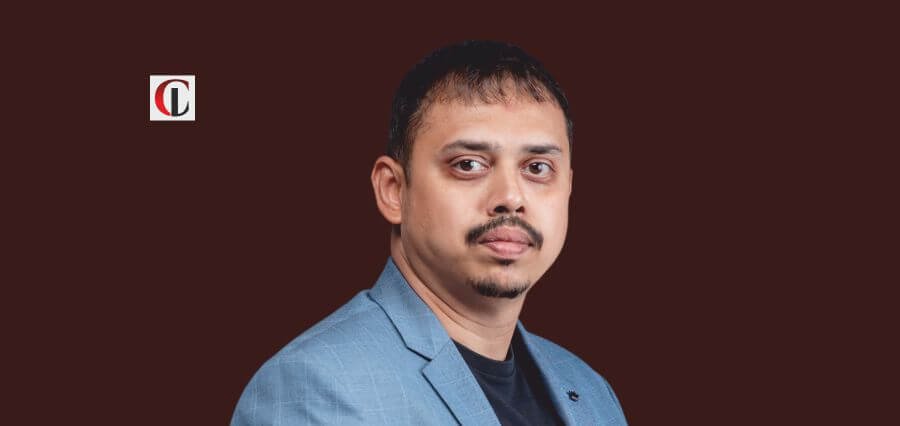
Technology can transform systems, but people ultimately experience its impact. True transformation goes beyond improving efficiency; it creates new possibilities and opportunities for people. Sandeep Bhosale recognizes the importance of a human-centered approach to technology. “Technology should not merely digitize what exists; it should expand the future and create new possibilities for people’s lives,” he says. As the Head of Enterprise Digital Transformation at Equity Group Holding PLC, his vision spans banking, payments, credit, insurance, investments, health, agriculture, and community development. His measure of success is straightforward: whether his teams create greater simplicity, security, and opportunity for customers, colleagues, and communities.
A people-centric philosophy supports this vision. In 2026, Sandeep contributed significantly to the development of Equity Group’s North Star for its technology strategy, creating a roadmap designed to connect capabilities across different markets and service lines. Not only does this vision keep up with the rate of technological progress, but it also strives to bring about a more integrated and intelligent finance world for millions of people across Africa. This vision is based on the very idea that technology achieves its maximum value by expanding people’s opportunities.
Leading with Purpose and Impact
Sandeep’s leadership philosophy has been shaped by nearly two decades of experience. His journey began in customer data management, where he learned an important lesson: even a small error in identity or reference data can develop into a significant operational issue that ultimately affects the customer.
He carried this perspective to VMware, where he supported the Quote-to-Cash transformation and worked with enterprise data to support a major growth ambition. This experience taught him to connect delivery decisions with board-level business outcomes and recognize that engineering decisions can have an impact far beyond the technology function.
He later built and led a young consumer business of his own, an experience that strengthened his sense of end-to-end ownership. As an entrepreneur, he learned that leaders must take responsibility for the consequences of their decisions.
At Equity Group, these experiences came together. His approach combines the customer-focused discipline developed early in his career, the strategic perspective gained at VMware, and the accountability shaped through entrepreneurship. These lessons now serve a broader purpose: using technology to expand inclusion and support socio-economic prosperity across Africa.
“Transformation is not merely a technology program, but a promise to shape a better future for people,” he says. His leadership is guided by three principles: clarity of purpose, measurable outcomes, and the courage to build what does not yet exist.
Engineering a Connected Future
The 2026 North Star gives this philosophy a clear direction. Sandeep helped shape a vision centered on one customer, one identity, one financial relationship, and one intelligent platform. Although its formal name is complex, the idea behind it is simple.
The vision is more than an architecture. It is a strategic commitment to build shared capabilities once, reuse them across businesses and markets, secure them by design, and turn technology into scalable impact.
The design brings together several connected layers. Customer experience and orchestration sit at the top, followed by shared business capabilities and core services. Data and intelligence form the next layer, supported by resilient infrastructure at the foundation. Security, fraud management, financial crime controls, compliance, auditability, and responsible AI are embedded across every layer. This approach transforms technology from a collection of separate systems into an integrated operating system for the organization.
The model also moves away from the traditional project-by-project approach. Instead of repeatedly building or buying isolated capabilities, teams develop reusable services for identity, onboarding, orchestration, data, intelligence, security, payments, and risk. These services can then be assembled across products and markets. A broader architecture portfolio supports this effort across platform, business, application, payments, and data architecture, with further domain architectures continuing to evolve.
A key question guides the teams: if this were being built today for their own families and for the future they expect, would they build it this way? This question encourages teams to look beyond incremental improvements and return to first principles.
Navigating Difficult Decisions
Every ambitious plan faces pressure, and Sandeep sees moments of decision as important tests of leadership and judgment. A large transformation portfolio can easily focus on immediate requests and the next launch. Stakeholders naturally want visible results. The easier approach is to spread resources across many projects and modernize systems one at a time.
He chose a different approach. He prioritized foundations that may not be visible at first but can create value across the enterprise. These include customer and product data, enterprise onboarding, orchestration, architecture standards, reconciliation, risk platforms, and reusable controls. At the same time, his teams addressed a fragmented application environment. They shifted the focus toward target architectures, system rationalization, and evidence-based investment decisions.
He also ensured that the platform vision remained practical. A platform is not one large application. It is also not a reason to replace everything at once. His teams work in phases. They strengthen capabilities that support the future, consolidate areas with duplication, and responsibly retire or transition systems that cannot support the target state.
“Judgment is rarely about choosing between good and bad; it is about balancing competing priorities, protecting the institution, moving it forward, and earning trust through clarity,” he says.
Turning Accountability into Trust
For Sandeep, trust is built long before a crisis occurs. “Trust is built long before a crisis and spent during one,” he says. He builds trust through consistency and sets clear expectations, follows through on commitments, and communicates openly when circumstances change. During uncertain situations, he does not pretend to have every answer. Instead, he separates what the team knows from what remains unclear and explains how the next decision will be made.
Structural change can test this approach. Equity Group’s operating model continues to evolve, and his teams must adapt while maintaining strong delivery. He connects their daily work to broader goals, including reusable platforms, stronger controls, lower costs, and a seamless customer experience across markets. He takes responsibility for risks, shares credit with his teams, and accepts ownership when challenges arise.
Fairness is equally important. Architecture reviews, product gates, and transparent prioritization help ensure that evidence carries more weight than hierarchy. When people understand why decisions are made and feel comfortable challenging them respectfully, uncertainty becomes easier to manage. The goal is to foster an environment where open communication is encouraged and accountability is shared at every level.
Empathy at the Heart of Leadership
Sandeep considers empathy one of his most practical leadership tools. Transformation requires people to leave familiar routines, develop new skills, and sometimes rethink their professional roles. Even an inefficient process can feel difficult to lose when it has become familiar. A leader must understand what change means for people before expecting them to embrace it.
He spends time where the work happens. He listens to colleagues who reconcile transactions, product managers overseeing fraud solutions, branch teams that onboard customers, and technology professionals responsible for production systems. These insights help shape priorities such as automation, governed workflows, modern enterprise platforms, and improved digital experiences.
This listening approach also influences the platform strategy. The architecture must reflect the realities of African markets. It needs to support low-bandwidth environments, diverse regulatory requirements, and local business conditions. It must also respect customers by reducing the need to repeat their identity and personal information at every interaction.
His regional responsibilities have strengthened this perspective. He leads teams across Kenya, Uganda, Rwanda, Tanzania, the Democratic Republic of the Congo, and South Sudan. These experiences have reinforced the importance of cultural humility. “A global standard creates leverage, while local listening creates legitimacy,” he says. His goal is to deliver both through common platforms and controls that remain sensitive to the context in which people use them.
Innovation by Design
Innovation is treated as a discipline rather than a separate department. Sandeep supports this philosophy through a clear and structured approach. Teams are encouraged to experiment within defined boundaries and have the freedom to develop and test new ideas. At the same time, every experiment must remain secure, explainable, and accountable.
Under his leadership, teams have developed structured pipelines for AI and agentic AI opportunities. The target architecture also incorporates AI trust, governance, and human oversight from the beginning. Decisions about what should scale are based on evidence rather than seniority or enthusiasm.
The same standard applies to personal growth. He describes himself as a student of AI, data, and platform engineering. He believes leaders must continue learning and challenging their own assumptions. Leaders cannot expect their teams to challenge conventional thinking while remaining unchanged themselves.
Technology Beyond Boundaries
There is strong potential in AI, automation, event-driven architecture, and modern cloud platforms. Sandeep evaluates each new opportunity through a human and institutional lens. The key questions are whether it can expand access, reduce friction, strengthen trust, protect value, or free people to focus on higher-value work. “Technology defines what is possible, while leadership decides what is worthwhile,” he says.
He recognizes that every technology choice brings important considerations. A single digital identity can simplify access, but it must protect consent and privacy. Real-time decision-making can improve service, but accountability must remain with people and institutions. Automation can improve efficiency, but employees need the right skills, clear roles, and a voice in how new technologies are adopted. The goal is to use technology in a way that strengthens human connection, trust, and organizational responsibility.
Fostering Collaboration and Accountability
Three principles shape the culture Sandeep builds. First, he places shared outcomes ahead of individual team results. Business, technology, operations, and risk teams work toward common customer and value measures. Second, openness is a standard practice. Decisions, assumptions, dependencies, and trade-offs remain visible. Third, every contribution is valued. An analyst who identifies a control weakness or a data lineage issue receives the same attention as a senior architect.
Enterprise architecture supports this philosophy. A platform can succeed only when teams agree on standards, ownership, and clear responsibilities. At the same time, teams need the freedom to innovate within defined boundaries. The same approach applies to leadership through clear responsibilities, honest escalation, and shared ownership. Technical product management, architecture governance, common roadmaps, and cross-functional reviews provide a consistent structure for this approach.
Constructive challenge is also encouraged, with openness to changing decisions when new evidence emerges. Quieter voices are deliberately included in important discussions. “Collaboration is not consensus on everything,” he says. It means challenging ideas rigorously, making responsible decisions, and moving forward with a shared purpose.
Empowering Future Leaders
When discussing the next generation of leaders, Sandeep identifies four essential qualities: adaptive curiosity, systems thinking, ethical courage, and technological fluency. Future leaders will need to keep learning as AI continues to reshape industries. They must also understand how decisions in one platform, country, or function can affect the wider organization.
Strong leaders will need to understand both business value and technology. They must be able to translate strategy into architecture and architecture into measurable outcomes. They will also need to treat trust as an important part of digital leadership.
In a digital enterprise, identity, consent, privacy, resilience, explainability, cybersecurity, and effective controls all contribute to trust. Leaders must ask difficult questions while ensuring that accountability remains with people.
Above all, future leaders will need to preserve humanity at scale. As organizations become more digital and distributed, belonging, purpose, and psychological safety become increasingly important. The leaders who thrive will combine the precision of an engineer, the imagination of an entrepreneur, and the empathy of a coach. They will remain globally informed, locally grounded, and focused on their purpose even as circumstances change.
A Legacy That Endures
When Sandeep looks back on his career, one achievement stands out. He helped shift digital transformation from a collection of projects toward an enterprise platform focused on inclusion, trust, and growth. The work began with practical outcomes, including digital onboarding, branch services, enterprise automation, modernized core capabilities, and higher-risk and governance systems. In 2026, these foundations became part of a broader future architecture.
He does not view a system or statistic as his proudest achievement. Instead, he values creating a clear and connected direction. The goal is to enable one identity, one relationship, and shared intelligence to serve customers across every part of the group’s business. “Every customer record represents a person, and every control protects the trust placed in us,” he says. He also believes that every reusable capability can help reduce the cost of delivering essential services to more people.
His understanding of legacy has evolved. Early in his career, success was measured through systems launched, processes improved, and savings achieved. He still values these results, but he now defines legacy by what continues to grow after a leader moves on. This includes stronger people, established practices, adaptable platforms, and lives improved through the work.
This belief has strengthened his focus on reusable capabilities, enterprise architecture, product management, data governance, automation, risk systems, and responsible AI. Technologies will eventually be replaced, and he accepts that reality. What can endure is the ability to build once and reuse responsibly, make evidence-based investment decisions, and treat trust as a core design principle.
His vision also extends beyond Equity Group. He wants to contribute to building an African technology institution that earns global respect by addressing the realities of the continent without limiting its ambition. His vision is integrated, real-time, resilient, sovereign by design, AI-led, and human-centred.
Ultimately, he measures legacy by the people and possibilities he creates. If those he has worked with go on to lead with greater courage, curiosity, and compassion, and if the architecture shaped by his teams becomes a foundation for possibilities that have yet to be imagined, he will consider that a legacy that continues to grow over time.
Imagining the Future
Sandeep saves some of his most personal thoughts for the end. “I am a dreamer. I dream for a living,” he says. He is not referring to dreams during sleep. He means the kind of dreams that keep a person focused and committed. These are dreams of serving millions of people with the same care given to an individual customer. They require turning a vision into reality through one system, one platform, and one service at a time.
He imagines an Africa where a farmer in Kisumu, a trader in Kinshasa, and a pharmacy in Nairobi can all access services through the same system. Most importantly, he imagines a system that works simply and reliably.
It is a distinctive ambition for a technology leader because it is not defined by a product or a list of features. Instead, it focuses on an outcome that people can experience and understand. That outcome represents the true purpose behind the work.