
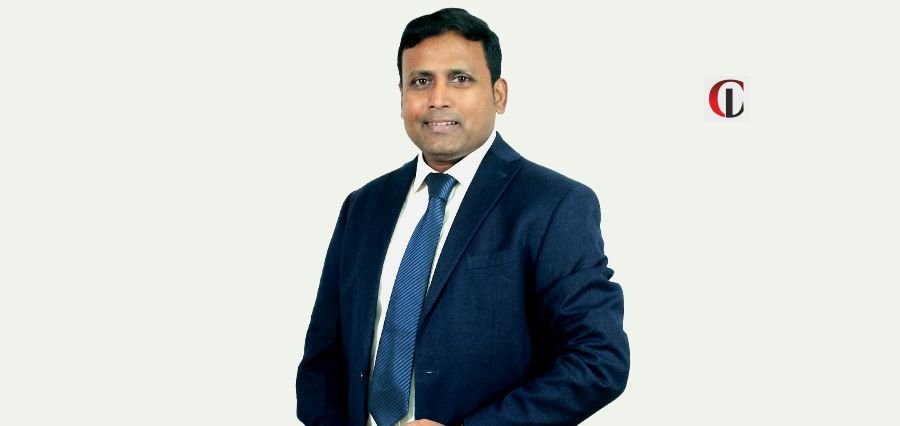
The career path of Avijit Dasgupta is determined by his ability to handle different challenges, which he selects to face instead of his job titles. His professional development from engineering to strategic architecture began with his first job in IPTV solutions and progressed through to his current role as a leader of advanced technology projects that span multiple markets. The experiences he gained from operating in various parts of the world and different industries and regulatory systems created a leader who recognizes that technological innovation needs proper alignment, trust, and transparency to succeed.
In his current role as Client Outcomes Director at SoftServe in the Middle-East region, he directs organizations in Banking & Financial Services, Government, Healthcare and Power & Energy sectors through their critical digital transformation projects by combining his strategic vision with his project delivery and execution skills. He has developed a unique skill set through his prior work experience in identity management & access systems, banking & financial services, fintech, education and healthcare platforms, which allows him to transform ambitious goals into organized project execution. His leadership style includes technical skills and expertise, and his dedication to developing trust among team members, stakeholders, and clients.
From Engineer to Architect: A Career Built on Breadth
Avijit began his professional journey in the IPTV and video streaming space, working with global clients across the United States, Europe, and Asia. He describes those years as invaluable, not primarily for the technical grounding they provided, but for what they revealed about how organizations function across cultures and time zones. “I wasn’t just writing code. I was learning how to translate business intent into working solutions, and how to build trust across distance,” he reflects.
From streaming, his path moved into SmartPlant engineering tools for Oil & Gas clients at Ulysta, where he was managing solution architecture and cross-stakeholder coordination across Europe, Australia, Southeast Asia, and the Middle East. That experience sharpened something critical in him. It was the understanding of how misalignment between delivery teams and strategic intent generates compounding costs, not just in budget, but in client confidence.
The most defining chapter of his early leadership, however, unfolded at CompuLynx in Kenya, where he spent nearly seven years as Head of Product, owning the full profit and loss of the company’s Digital Identity Management and Payment Solutions practice. He built and led cross-functional teams across multiple geographies, driving solutions that managed digital identity-based e-KYC, biometric e-Verification, digital wallet, e-Voucher and e-Agency Banking payment systems for BFSI, Government, NGO, and Education clients across Kenya, Uganda, Tanzania, Rwanda, Ethiopia, Somalia, South Sudan, DRC in East Africa, the Middle-East and South-East Asia.
Simultaneously, he served as CTO of LCT Africa, architecting a comprehensive healthcare eClaim Administration platform integrated with different health insurance ecosystems and hospital management systems for the African healthcare insurance market. Running two executive mandates in parallel, across different regulatory environments, technology stacks, and organizational cultures, forged in him a leadership capability that few professionals develop: the ability to hold multiple complexes, high-stakes threads in productive tension without losing coherence or quality in any of them.
“Clients don’t just buy a product or a service. They buy confidence. Confidence that you understand their world, that you will anticipate problems before they do, and that you will be a genuine partner in their success, not simply a vendor,” he observes.
Saudi Arabia and the Vision 2030 Imperative
Before joining SoftServe, Avijit spent nearly a year as a Technology Consultant and Solutions Architect with a Riyadh-based Technology Control Company, supporting numerous public and private sector projects aligned with Saudi Arabia’s Vision 2030 digital transformation agenda. Managing solution architecture reviews, cross-stakeholder coordination, and deployment planning across government agencies and systems, he gained an intimate understanding of how public sector transformation operates in this region and what demands those who lead it have.
That experience proved to be not a detour but a deliberate preparation. Today, as Director of Client Outcomes for SoftServe’s Saudi Arabia operation, he sits at the exact intersection of strategic vision and operational execution, serving clients in Banking and Financial Services, Healthcare, Government, Oil and Gas, and Energy sectors. These organizations are not making incremental adjustments; they are fundamentally reimagining how they operate, driven by the urgency of a national transformation mandate with global ambitions.
“Many of our clients are operating under ambitious national mandates, Vision 2030 being the most prominent, which means their strategic goals are tied not just to organizational performance but to national transformation agendas. That adds a layer of complexity and urgency that demands a very clear and shared strategic framework before a single delivery activity begins,” he explains.
Structured Empowerment: A Leadership Philosophy Forged in Complexity
When asked about his leadership, Avijit offers two words with deliberate precision: structured empowerment. It is a phrase that captures something he has observed consistently across two decades of leading teams in dynamic environments: high-performance individuals do not need micromanagement. They need clarity, context, and confidence that their leader has their back.
In practice, this means he invests heavily in structural choices that create precision without rigidity, clear governance frameworks, well-defined delivery cadences, transparent RAID log management, and regular alignment checkpoints that keep teams calibrated without disrupting their momentum. At SoftServe, where delivery teams support client programs simultaneously across multiple sectors and regulatory environments, that structural foundation is not bureaucracy. It is scaffolding that makes agility possible.
“Adaptability is a leadership muscle, not a reaction,” he insists. He traces its development to the pressure-test years at CompuLynx and LCT Africa, where he managed two executive mandates concurrently and developed what he calls a dynamic leadership operating system: one that could shift register quickly from high-level strategic thinking to granular technical problem-solving, sometimes within the same hour. At SoftServe today, he models the same adaptability for his teams. When client priorities shift mid-program, and in the Middle East’s transformation landscape, they frequently do he responds with calm, structured agility rather than reactive scrambling. That tone sets the entire team’s response pattern.
One of his strongest leadership convictions is that high performance is a product of context and trust, not pressure and surveillance. When he boards delivery teams for a new client engagement, his priority is not the project plan. It is ensuring that every team member understands the human significance of what they are building: the patient whose insurance claim gets processed faster, the banking customer whose identity is protected, the government agency whose services become genuinely accessible to citizens for the first time.
“Teams who understand the client as a human organization, not just a project, deliver more briefly with higher quality and responsiveness. That understanding changes everything about how they make decisions,” he says.
The Covenant of Client Partnership
Client relationships, in Avijit’s framing, are not governed by contracts. They are governed by covenants. The contract defines commercial terms. The covenant defines human commitment. And it is the covenant that determines whether a relationship becomes truly transformed.
He builds that covenant through six principles, each refined across twenty years of client-facing leadership in demanding and varied contexts. The first is earning trust in the details, not the declarations. “Trust accumulates quietly and consistently, through every commitment honored, every risk transparently surfaced, every problem solved before the client had to ask,” he argues. In the Middle East market specifically, where relationship capital is the foundation of all business, clients possess a refined instinct for distinguishing genuine partnership from polished vendor management.
His second principal centers on listening more strategically than speaking, not merely to what clients say explicitly, but to what they reveal implicitly through their questions, their hesitations, their organizational behavior, and the gaps between their stated priorities and their actual concerns. His third, and perhaps most firmly held, is radical transparency in difficulty. When a delivery risk emerges, he surfaces it to the client immediately, with context, with analysis, and with a proposed path forward. A client can always forgive a problem. They cannot forgive a surprise.
The remaining principles speak to depth of sector understanding, investment in the human relationship beyond the professional one, and the consistent creation of value beyond contracted scope. Together, they produce something he describes as the most commercially durable outcome in client operations: a relationship that evolves from transactional delivery into a genuine strategic partnership.
At CompuLynx, single-product client engagements consistently expanded into multi-year, multi-solution partnerships because the human trust foundation proved strong enough to support growing commercial commitment over time. That pattern now defines his approach at SoftServe, where he actively identifies expansion opportunities within existing client portfolios, not from a commercial instinct, but from a deep understanding of where SoftServe’s capabilities can address client challenges adjacent to what is already being solved.
Decision-Making Under Pressure: The Art of Structured Clarity
Avijit does not believe pressure is the enemy of good decision-making. Ambiguity is. And the most important thing a leader can do in moments of genuine complexity is create clarity where others see only confusion.
His first and most counterintuitive response to high-pressure situations is to deliberately slowdown in the initial moments, even when everything signals urgency. He diagnoses before prescribing: What do we know with certainty? What are we assuming? What information do we still need? And critically, what is the real cost of thirty minutes of structured thinking versus immediate action on incomplete information?
He applies what he calls a 70 percent rule: when approximately 70 percent of the ideal information set exists and the cost of delay exceeds the risk of imperfect information, he makes the call but makes it transparently, communicating clearly what is known, what is assumed, what is still being learned, and what the contingency position is if unknowns resolve differently than anticipated. That transparency transforms a pressure decision from a gamble into a calculated, structured response. Clients and teams respond to that quality of thinking with confidence rather than anxiety.
Perhaps the most defining test of these principles came during a 72-hour crisis at CompuLynx and LCT Africa, simultaneously a critical biometric system integration failure affecting government service delivery collided with a healthcare platform deployment delay caused by a key team member’s sudden departure, both erupting within the same window. His response was not to fight fire across both fronts reactively. He gathered both teams separately, acknowledged the difficulty without minimizing it, triaged with rigor, assigned clear ownership with specific resolution timelines, and called both clients proactively, presenting structured resolution plans before either client had the opportunity to chase. Within 72 hours, both situations were resolved. Both client relationships were strengthened through the experience rather than being damaged by it.
Cultivating the Next Generation
Avijit measures his leadership not by personal achievement but by the capability and confidence he leaves behind in the people he leads. “Building people is not a responsibility that sits alongside his core job. It is his core job,” he insists.
His talent development philosophy rests on three convictions. The first is to invest in potential, not just performance, identifying individuals who demonstrate genuine curiosity, adaptability, and commitment, and investing disproportionately in their growth before their performance metrics justify it. The second is to grow people through meaningful stretch, not comfortable routine, exposing promising team members to client conversations, strategic planning sessions, and cross-functional leadership challenges that sit just beyond their current comfort zone, while providing the coaching and psychological safety they need to navigate that stretch successfully. The third is to make development a daily conversation, not an annual event, weaving professional growth into the fabric of everyday working life through regular one-on-ones, real-time feedback, and shared reflection after major program milestones.
The outcomes of this approach carry personal significance for him. At CompuLynx, junior product analysts that he mentored evolved into senior delivery managers leading their own client portfolios. At LCT Africa, the early-career engineers he hired grew into architects, making independent technical decisions that shaped platform evolution. At SoftServe, he is actively investing in the next generation of Middle East transformation leaders.
His own journey has never stopped. He recently completed a Master’s degree in AI and Technology Management at UCAM Spain and currently pursues a Doctorate in Management, with a thesis examining AI adoption and strategic performance outcomes, investigating the mediating role of organizational readiness and the moderating role of regulatory environment on commercial banks in the GCC countries. “That academic investment is not separate from his professional practice; it feeds directly into how he leads SoftServe’s client engagements today,” he emphasizes.
The Future He is Building
Avijit’s vision for the future of client operations is clear and ambitious. He sees three defining shifts reshaping the field. The first is the move from reactive service delivery to predictive partnership using AI-powered analytics, deep domain intelligence, and continuous strategic listening to stay consistently ahead of client needs rather than responding to them. The second is the elevation of human judgment in an increasingly automated world — as AI assumes more operational and analytical functions, the irreplaceable value of a client operations leader shifts decisively toward contextual wisdom, relationship intelligence, ethical judgment, and the ability to navigate organizational complexity with empathy and cultural fluency.
The third shift is the regionalization of transformation leadership. The Middle East no longer simply receives global technology trends it increasingly generates its own transformation agenda, driven by national mandates, sovereign AI initiatives, and a rapidly maturing technology ecosystem. The future demands leaders who combine global technology fluency with deep regional contextual intelligence. He positions himself at precisely that intersection, and his recognition as a Top Global CIO, Global Technology Leader of the Year, and one of the Top 25 Software Product Executives globally reflects a profile that carries weight well beyond any single organization.
His personal leadership evolution moves simultaneously in three directions: from delivery leader to transformation architect engaging clients at the strategic planning level rather than merely the delivery governance level; from experience-led to evidence-led leadership bringing rigorous academic frameworks into client strategy conversations alongside practitioner wisdom; and from regional influence to broader thought leadership contributing to industry conversations, mentoring the next generation, and helping shape how the field thinks about AI-enabled client operations at a strategic level.
“The most valuable thing a client operations leader offers is not a service catalog; it is the genuine, consistent commitment to the client’s success in all conditions,” he says.
A Leader for the Transformational Moment
Avijit Dasgupta’s story carries a lesson that resonates beyond the specifics of any single career or any single market. It demonstrates what becomes possible when a leader combines technical depth with human intelligence, operational rigor with strategic imagination, and the confidence to lead through complexity with the humility to keep learning.
The Middle East stands at an extraordinary inflection point, a region simultaneously honoring its heritage and reimagining its future at a pace and scale that few transformations in modern history can match. SoftServe’s clients in Saudi Arabia are not merely adopting new technology. They are rebuilding the operational foundations of entire sectors, guided by a national vision that demands both urgency and excellence.
In that context, the role of Director of Client Outcomes is not a support function. It is a strategic instrument. And in Avijit Dasgupta, SoftServe has placed at the helm of that instrument a leader whose twenty-five years of accumulated wisdom forged across the world’s most demanding technological environments now serves one of the world’s most consequential transformation agendas.
“I believe I am exactly where I need to be, to make that vision real. And I am only getting started,” he says.