
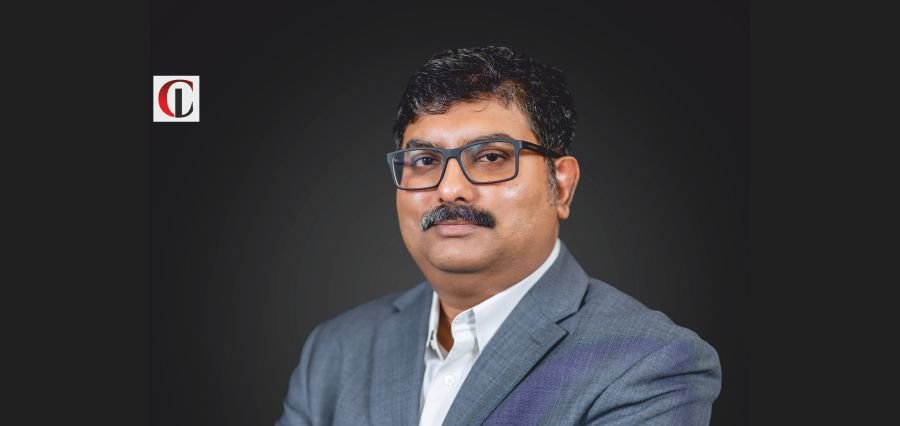
Few leaders represent the art of transformation like Soumya Ganguly, whose professional journey exemplifies a unique combination of strategic depth, cultural intelligence, and human-centered leadership. Currently he is serving as Senior Principal and Regional Head where he has spent his career bridging the gap between global vision and local realities, technology and trust, innovation and ethics. His leadership journey is one of careful progression, enabling firms to use intelligence ethically while maintaining their primary purpose.
Over the years, he has led cross-border teams, reinvented data-driven strategies, and transformed businesses into adaptive ecosystems where people and technology thrive. What distinguishes him is his conviction that progress must benefit mankind as well as business. By focusing culture, governance, and leadership on shared principles, he has converted AI from a technical tool to a driver of growth, inclusivity, and integrity. His legacy continues to inspire a new generation of leaders who are seeing the future of business not just in smarter systems, but also in wiser decisions.
Balancing Global Vision with Local Reality
Soumya’s leadership philosophy centers on what he describes as a “dual lens”, maintaining steadfast corporate vision while adapting strategies to meet local business realities. This approach recognizes that European banking, Southeast Asian healthcare, and North American manufacturing each operate under unique dynamics: distinct regulatory frameworks, varied talent pools, different cultural expectations, and divergent competitive landscapes.
“Vision alone is insufficient. Local markets have unique dynamics. Executives must empower regional leaders to interpret and execute the vision in ways that reflect these realities, ensuring each regional strategy remains ‘fit for purpose’ without detaching from the enterprise’s AI transformation trajectory,” he emphasizes.
His framework rests on several strategic pillars. He demands clear corporate vision that cascades from boardroom to local offices, defining precisely how AI serves long-term goals, whether through personalization, automation, or predictive insight. He champions cross functional collaboration, integrating technology and business leadership at every level to co-design AI use cases that address genuine business problems and scale across borders.
Regional teams in his model serve as “test beds” for innovation, experimenting with AI pilots responsive to local conditions and feeding lessons back to the global knowledge pool. This creates what he calls “cross pollination of success” allowing breakthrough innovations discovered in one geography to rapidly adapt and scale across others.
His governance approach strikes a delicate equilibrium: strong oversight manages ethical risks, data privacy, and compliance, while maintaining flexibility to adapt governance models for different regions and regulatory environments. Companies like Mastercard and National Australia Bank exemplify this balance, by unifying global AI architecture while enabling localized applications tailored to regional needs.
Prioritizing the Human Element
Where Soumya truly distinguishes himself is in his conviction that technology, culture, and trust must advance in lockstep. While peers chase the latest models and platform trends, he invested in what he terms “leadership fluency” ensuring executives, managers, and teams understand not merely what AI can accomplish, but what it should accomplish.
“In the early stages of AI adoption, organizations become enamored with algorithms, infrastructure, and technical scale. But we recognized early that no amount of model accuracy or computational brilliance can compensate for lack of leadership clarity, cultural buy-in, or trust between teams and technology,” he observes.
This philosophy stems from viewing AI as an enterprise organism rather than disconnected projects. He believes sustainable scaling demands a cultural fabric that aligns values, incentives, and behaviors around both innovation and responsibility.
His leadership development initiatives reflect through this conviction. When launching AI programs, he challenged his leadership team with a fundamental question: “What kind of company do we want to become once AI is fully integrated?” This forced thinking beyond automation or productivity gains towards organizational identity, mission, and impact.
He built cross-functional AI councils not to manage compliance, but to encourage ethical dialogue. Product and data leaders partnered with business unit heads to co-sponsor outcomes, blending technical ambition with enterprise accountability. Leaders learned to frame AI decisions in terms of trust, societal implications, and customer relationships, not just performance metrics.
Building Cultural Readiness
Soumya discovered that cultural willingness, not technical readiness, often determines whether AI succeeds or stalls. Teams that fear technology, distrust it, or feel alienated by it can derail even the most capable models.
His response transformed curiosity into a core business value. He told teams that experimentation was acceptable, mistakes were learning opportunities, and surfacing ethical concerns carried no penalty. This openness created psychological safety, which generated velocity. By removing the stigma of imperfection, he built cultural resilience, the capacity to adapt, learn, and iterate as technology evolves.
He invested heavily in storytelling, recognizing that culture thrives on narratives, not spreadsheets. Spotlighting AI projects that tangibly improved lives or streamlined work allowed employees to see themselves in the technology. Humanizing outcomes deepened engagement and reduced anxiety surrounding automation.
Critically, he broadened conversations beyond data scientists and engineers. He invited designers, marketers, and frontline employees to co-creating AI policies and use cases. This inclusivity reinforced that AI wasn’t something done to the organization but built with it.
Operationalizing Trust
Trust, Soumya insists, serves as the oxygen of AI transformation. Without it, even advanced systems suffocate under skepticism and resistance. His guiding principle: trust in AI must be earned daily through transparency, verifiable performance, and consistent communication.
He operated trust through governance and empathy equally. Governance included establishing independent review boards for algorithmic fairness and bias monitoring, ensuring ongoing accountability. Empathy meant understanding that trust remains emotional before procedural people trust what they understand and distrust what feels obscure.
His teams demystified AI by training the workforce on how algorithms make decisions, how data privacy is maintained, and where human judgment remains irreplaceable. They spoke in plain language rather than technical jargon, emphasizing AI as partner, not replacement. Over time, this transparency fostered confidence, and confidence bred adoption.
Developing Future Leaders
Soumya’s commitment to building sustainable Tech & AI leadership pipelines demonstrates his forward-looking approach. He goes beyond hiring for technical skills, actively identifying and mentoring individuals with potential to become influential, future-focused leaders.
His talent identification strategy blends qualitative insight with AI-driven analysis of behavioral data, career trajectories, and performance feedback. This minimizes bias and surfaces diverse, high-potential candidates demonstrating learning agility, influence, and resilience.
“Move beyond ‘tech-star’ models. Include collaborative orchestrators, authentic connectors, and adaptive learners. Aligning with a spectrum of possible industry futures, not just traditional top-down leadership,” he advises.
His mentorship framework combines structured development with adaptive support. Leaders share not only technical knowledge but “lived experience” narratives about failure, ethical dilemmas, and strategic risk-taking. This compresses years of experience into powerful learning moments. He pairs human mentorship with AI-powered feedback platforms that assess progress, highlight gaps, and provide personalized recommendations.
Rotational assignments across AI R&D, business, operations, and governance broaden vision and cultivate empathy for multiple stakeholders. Psychological safety and experimentation remain valued, crucial for leaders navigating uncharted AI territories.
Championing Responsible AI
Soumya treats responsible AI as strategic imperative, not regulatory checkbox. He directly links AI strategy to organizational values, ensuring every business function aligns innovation with clear, measurable ethical objectives. CEOs in his model transparently communicate their AI driven decisions, embedding principles of fairness and inclusion at every layer of model development.
His initiatives include setting actionable objectives like mandatory bias audits, fostering diverse development teams, and commissioning third-party validation of AI model outputs for fairness and explainability. He hosts regular stakeholder conversations to demystify how AI works and its intended impact.
Overcoming Traditional Industry Barriers
Introducing AI to traditional industries presents deep-rooted cultural and organizational barriers. Soumya encounters leadership skepticism and inertia, workforce anxiety about job displacement, lack of AI literacy, and attachment to legacy processes. His response combines visionary advocacy with practical, empathic leadership.
He champions AI as strategic imperative, communicating compelling visions focused on growth opportunities and workforce evolution rather than technology alone. He leads by example, visibly participating in AI literacy programs and transparently sharing his learning journey. This signals that adaptation represents shared responsibility and core organizational value.
The Bridge Builder
Soumya positions himself as a bridge between AI technologists and business leaders, a role he describes not as convenience but as defining philosophy. Where technologists see elegant systems, executives must see viable ecosystems. Where engineers speak of models and validation, CEOs and CFOs think in terms of risk, growth, and sustainability.
“I chose early to position my leadership at the frequency where those wavelengths harmonize, where human insight and computational intelligence meet as equals,” he explains. This translation becomes a form of leadership empathy, holding two paradigms simultaneously: the precision of code and the ambiguity of human behavior. That duality unlocks decisions that prove not only smart but wise.
His multidisciplinary teams blend data scientists, behavioral economists, ethicists, and business model designers into unified operating units. This ensures each technological initiative anchors in clear narratives of purpose, measurable outcomes, and organizational readiness.
A Defining Contribution
Looking back across his career, Soumya identifies one pivotal decision: moving Technology & AI from functional discipline into the organization’s strategic core, reshaping it from support capability into value-creating ecosystem. He reorganized data functions around business outcomes instead of technical verticals, embedding AI strategists and data scientists directly into business units.
Data stopped being “the language of technologists” and became the common language of decision-making. The restructuring proved cultural, not merely operational. Instead of optimizing solely for predictive accuracy, teams began optimizing for trust, explainability, and ethical resilience, reframing the question from “Can AI do this?” to “Should AI do this?”
Looking Forward
Soumya envisions emerging technology leadership archetypes he calls “AI fluent leaders” individuals who navigate both technological nuance and human dynamics with equal confidence. They understand that trust is earned through accountability, that culture determines data integrity, and that leadership means stewarding technology responsibly, not commanding it.
“The ultimate goal isn’t creating AI-powered organizations but trust-powered ones. That shift from efficiency to integrity defines the difference between organizations using AI merely to optimize operations and those using it to elevate humanity and increase productivity at scale,” he states.
As AI adoption accelerates globally, Ganguly remains focused on scaling what he terms “the human advantage.” Technology can increasingly replicate patterns and automate logic, but cannot replicate judgment, empathy, or moral discernment. These qualities remain leadership’s domain.
For Ganguly, visionary leadership in the AI age isn’t about predicting the next technology curve—it’s about shaping conditions allowing intelligence, both human and artificial, to thrive ethically, inclusively, and sustainably. The leaders of tomorrow won’t merely leverage data; they’ll democratize its power. They won’t just adopt AI; they’ll align it with purpose and humanity.
“When I look back at our journey. I realize technology was always the easy part. What made the difference was the courage to lead differently to put people and purpose at the center of an AI-first world,” he reflects.