
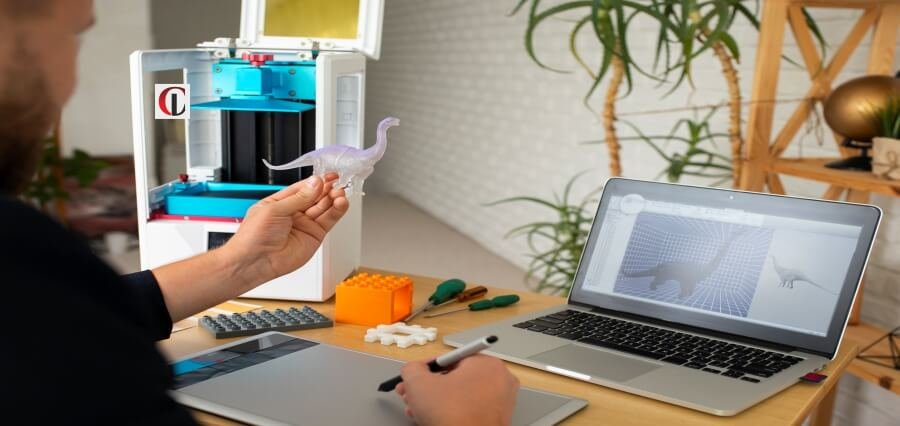
Rapid innovations in 3D printing technologies are the key factors behind a complete change of the industrial sector in the last several years. In the past, manufacturing has been deeply dependent on complicated procedures that cut away parts from a larger block to get the needed component shape. These methods were efficient to some extent, but they were also the main culprits of excessive waste, high costs, and limited capabilities for complex geometries. Next- generation 3D printing or additive manufacturing is a technology that addresses these issues by fabricating items layer after layer. In fact, the process not only saves material but also gives designers an entirely new freedom of the form and quickness of prototyping as well as production. Companies in all industries, such as aerospace and healthcare, are turning to these technologies to shorten product development cycles, make their supply chains more efficient, and increase the level of customization. The advantages of next, gen 3D printing does not stop at the traditional energy efficiency gains. There is a long list of materials that can be used by advanced printers, light, weight metals, ceramics, and bio, compatible polymers being some of them. These innovations have raised the potential of additive manufacturing to the complete production of the end, use parts besides just rapid prototyping.
Design Flexibility and Customization
The most prominent and far reaching benefit of next- generation 3D printing is the ability to create complex geometries, which are either impossible or very expensive when using traditional manufacturing methods. In fact, components with complex lattice structures, internal channels, or organic shapes can now be made with a very high level of precision. This ability, in particular, finds extremely useful applications in the industries, such as aerospace, automotive, and medical devices, where reduction of weight, structural strength, and functionality are of utmost importance. For example, businesses in aeronautics are using 3D printing technology to produce light parts that are capable of holding the structure while the consumption of fuel can still be made more efficient. Likewise, medical device makers are producing implants and prosthetics that are uniquely tailored to fit the exact anatomy of a given individual, thereby, immensely enhancing the outcomes and the comfort of the patients.
Customization has moved beyond being a niche offering to become a strategic advantage that is possible through additive manufacturing. Compared to conventional mass production, changing the design of a product normally implies costly changes of tools, with 3D printing it is feasible to swiftly iterate and customize by making no substantial investments. Flexibility is one of the factors in the rise of sectors such as consumer goods, footwear, and luxury goods where the demand for personalized products is skyrocketing. Facing the challenge, retailers and manufacturers are implementing digital design platforms that enable customers to design products reflecting their personal preferences.
Streamlining Production and Supply
3D printing is altering the way supply chains function. In most cases, production is done through a complicated global network of suppliers and logistics which leads to delays, costly inventories, and the risk of business disruptions. With additive manufacturing, companies have a decentralized way of producing parts on demand and closer to the place of consumption. Thus, they shrink their lead times, shorten their inventory holdings and become more responsive to market fluctuations. Moreover, local production lowers transport costs and the environmental impact, helping industries to achieve their sustainability goals. As supply chain resilience is becoming a key business challenge, 3D printing is an attractive way that links efficiency with flexibility.
Additive manufacturing is transforming production to be more efficient with the help of automation and digital integration besides saving supply chains. Today’s 3D printers are highly automated and require little human intervention. The advanced software that handles the design files, monitors the print quality, and optimizes material usage is also responsible for the operation. Such automation eliminates the possibility of errors, increases the level of repeatability, and brings skilled labor to more valuable tasks. On top of that, the smart factories where 3D printing is combined with Internet of Things (IoT) sensors, predictive analytics, and digital twins is going farther in operational efficiency.
Advancing Industry Innovation
The revolutionary impact of 3D printing technology is not only limited to traditional manufacturing processes. Additive manufacturing is creating patient, specific surgical instruments, dental appliances, and even bio-printed tissues, a scenario healthcare is eagerly looking forward to. On top of that, car and plane manufacturers are 3D printing parts to make their vehicles lighter, thus more fuel, efficient and also to shorten their prototyping cycles. The technology is made use of by portable electronic devices makers to shape attractive solution sets and also functioning through rare componentistics and packaging features simplification. The modern buildings industry, too, where the technology is being tested on prints of houses or the construction of community infrastructure, is getting awe, struck by this transformative power of additive manufacturing.
The pace of this innovation is kept high by the concurrent usage of 3D printing with other trending technologies like AI, robotics, and advanced material science. The truth is artificial intelligence, based solutions can even top designers’ work when it comes to strength, weight, and minimal use of materials optimization by generating designs. In the meantime, the work of post, processing and assembly becomes seamless thanks to the robot units involved. Meanwhile, new materials, among them composites and smart polymers, raise the functional boundaries of outputted items. Both electrifying startups and legacy companies are busy trying to find complementation between their resources to be able to break through barriers and create out, of, the, box products and processes.
Conclusion
Next-gen 3D printing is transforming the manufacturing sector by integrating design freedom, individualization, supply chain cost, saving, and tech integration. Basically, its power to come up with super, complicated structures, cut down on material waste, and allow production to be local is solving a whole bunch of problems that the big guns of manufacturing have been facing lately. On top of that, with features like advanced materials, AI- driven optimization, and smart factory integration, additive manufacturing is becoming the main industrial innovation fuel. Companies that decide to implement and spend money on these technologies are not only upgrading their operational efficiency, but also creating the right conditions for themselves to be able to compete in an increasingly agile and technology- driven marketplace.